Maximize maritime predictability and eliminate demurrage risks across key ASEAN trade routes with our targeted operational modules.
Founded in 2015, Trackingeyes is a leading provider of global end-to-end logistics tracking and supply chain visualization solutions. With a founding team boasting over ten years of logistics expertise, we deeply understand industry pain points. We specialize in global end-to-end cargo tracking by sea and air, serving thousands of import and export enterprises worldwide. Our services include customizable tracking solutions and open API data interfaces to enhance supply chain visibility and operational efficiency.

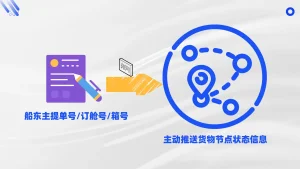
Through API interface integration, the dynamics of goods can be automatically written back to internal systems and customer service systems of the enterprise, assisting global logistics enterprises, supply chain enterprises, cross-border e-commerce enterprises, software platforms and other enterprises to achieve more efficient and refined goods tracking management, and to do risk control and prediction in advance.
In the global trade ecosystem, Malaysia represents a pivotal logistical node. Home to Port Klang—the 12th busiest container port in the world—and the strategic Port of Tanjung Pelepas (PTP), the nation bridges the maritime traffic traversing the Straits of Malacca with the broader South China Sea. Under the national mandate of the Malaysian National Transport Policy (NTP) 2019-2030, the government has prioritized digital infrastructure upgrades to establish the country as a premier regional distribution hub.
Despite infrastructure advantages, local supply chains face severe challenges in predicting port dwell times, transshipment latency, and customs processing delays. Without real-time visibility, cargo pick-up failures at destination ports cause millions in demurrage penalties annually for manufacturers.
Industrial activities across the Klang Valley, Penang’s high-tech manufacturing corridors, and Johor’s petrochemical zones depend heavily on just-in-time (JIT) delivery. Raw material imports from mainland China and finished goods exports to Western markets require an integrated approach to maritime data tracking. Traditional tracking processes rely on manual manifest updates from cargo lines, which often fail to account for intermediate changes, schedule slips, or skipped ports of call.
Malaysia remains one of China’s largest trading partners within ASEAN, facilitated by the Regional Comprehensive Economic Partnership (RCEP). Chinese manufacturers, renowned for high-velocity production systems and component assembly pipelines, rely on hyper-efficient outbound logistics pipelines. A delay of 48 hours at a Chinese terminal due to port congestion or customs processing directly affects manufacturing schedules in Penang or Selangor.
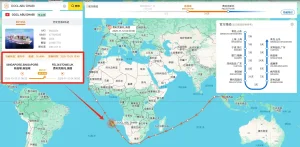
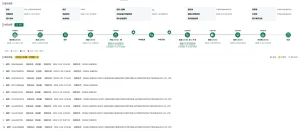
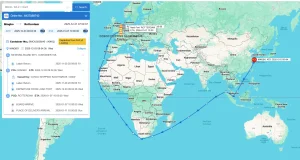
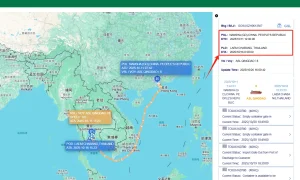
To mitigate these systemic dependencies, leading manufacturers are adopting direct API integrations. By feeding real-time AIS vessel telemetry and cut-off alerts directly into enterprise resource planning (ERP) platforms, production planners can anticipate delays up to 10 days before vessel arrival. This preemptive planning model allows manufacturing lines to adjust scheduling, re-allocate warehouse spacing, and renegotiate local transport pickups without incurring emergency surcharge rates.
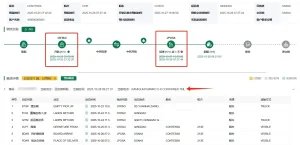
Seamlessly feed ocean freight data, ETA estimations, and rail coordinates into your core enterprise platforms.
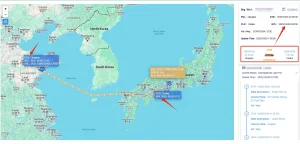
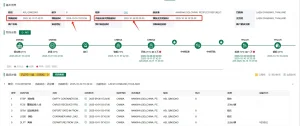
Implementing localized visual logistics algorithms allows Malaysian companies to mitigate vulnerabilities across common domestic transport patterns:
When enterprise procurement managers evaluate tracking software or data API services, they must assess several crucial criteria to ensure long-term integration viability:
The logistics industry is transitioning away from reactive visibility—where operators check tracking interfaces only after a delay has occurred—towards autonomic logistics visualization. In this paradigm, artificial intelligence engines continuously evaluate incoming shipping coordinates, weather patterns, and port throughput rates. If an anomaly is identified, the system automatically adjusts transport bookings, prompts suppliers to delay matching pickups, and warns downstream teams, significantly reducing manual intervention and human error.
Unlock end-to-end visibility with our trusted tracking platform. We bring proven reliability to both ocean and air cargo tracking, giving you the accurate data and control needed to streamline operations from port to runway.
Contact us →Discover technical insights regarding our container and shipment tracking solutions serving Malaysia.
Explore our full catalog of high-performance visibility APIs and automated tracking tools designed for complex supply chains.
 Trackingeyes