Discover our core localized solutions optimized for Rotterdam port nodes, Dutch manufacturing logistics, and European distribution channels.

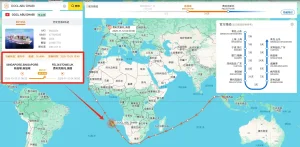
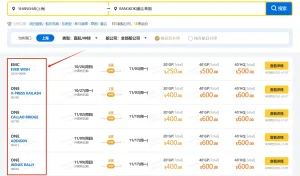
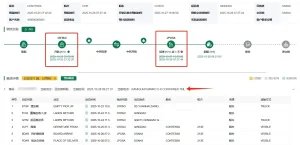
The Netherlands occupies an irreplaceable position as the Gateway to Europe. Anchored by the Port of Rotterdam, Europe's largest deep-water seaport handling over 14 million TEUs annually, and Amsterdam Airport Schiphol, one of the continent's busiest air cargo hubs, the Dutch logistics landscape is the nervous system of European commerce. Over 60% of all European consumer markets can be reached within a 24-hour truck drive from these key nodes.
However, this structural prominence makes the Netherlands highly vulnerable to modern macro-logistical challenges. As shipping lanes adapt to geopolitical realities, and inland congestion across the Rhine-Scheldt delta intensifies, the demand for real-time shipment tracking services has transitioned from an operational luxury to a survival requirement for Dutch manufacturers, trading houses, and freight forwarding agencies.
To maintain competitive advantages, Dutch logistics providers must shift from legacy tracking mechanisms to automated, AI-driven visibility platforms that integrate marine telematics, automated ETA engines, and seamless enterprise system capabilities.
Globally, shipping networks are experiencing severe disruption due to route diversification (e.g., Cape of Good Hope detours), carbon tax regimes (such as the EU ETS system), and localized labor disputes. These challenges require modern tracking platforms to operate at unprecedented data density levels.
The global logistics trend focuses heavily on the adoption of Real-Time Transportation Visibility Platforms (RTTVPs). These systems utilize raw Automatic Identification System (AIS) transponder data, combined with machine learning algorithms, to evaluate historical patterns, weather forecasts, and port queue densities. This shifts the tracking capability from basic static updates (e.g., "vessel departed") to dynamic, proactive predictive engines capable of forecasting delay risks days before they occur.
Dutch companies, operating within a highly digitized economy, are leading this transformation. There is a rapid phase-out of legacy EDI (Electronic Data Interchange) transmissions in favor of real-time sailing schedule APIs that continuously feed operational data directly into ERP structures (such as SAP, Microsoft Dynamics, or customized enterprise systems).
Optimizing inland shipping along the Rhine and Meuse rivers. Barge operators dynamically match ocean vessel arrival schedules with local warehouse capacity to prevent expensive container storage overage penalties.
Integrating real-time milestone tracking (such as ATA and actual discharge events) with Dutch customs portal operations. This accelerates terminal release processes and reduces overall dwell times.
Supporting the Netherlands' agricultural and pharmaceutical sectors by providing continuous location-tracking solutions coupled with sensor integrations for temperature and humidity.
The next decade of Dutch and European logistics will be defined by self-orchestrated and hyper-connected supply networks. Our engineering pathway highlights key technological milestones:
Phasing out legacy file transfers in favor of sub-second Webhook APIs. Automated data feeds deliver vessel schedules, customs indicators, and inland tracking points directly into internal company databases.
Utilizing neural networks trained on historical voyage profiles, weather patterns, and harbor density data. Our algorithms forecast congestion delays before ships enter the English Channel or the North Sea.
Autonomous triggers react immediately to vessel delays by auto-rescheduling inland transport, notifying distribution warehouses, and updating commercial invoices without manual operational involvement.
Founded in 2015, Trackingeyes is a leading provider of global end-to-end logistics tracking and supply chain visualization solutions. With a founding team boasting over ten years of logistics expertise, we deeply understand industry pain points.
We specialize in global end-to-end cargo tracking by sea and air, serving thousands of import and export enterprises worldwide. Our services include customizable tracking solutions and open API data interfaces to enhance supply chain visibility and operational efficiency.

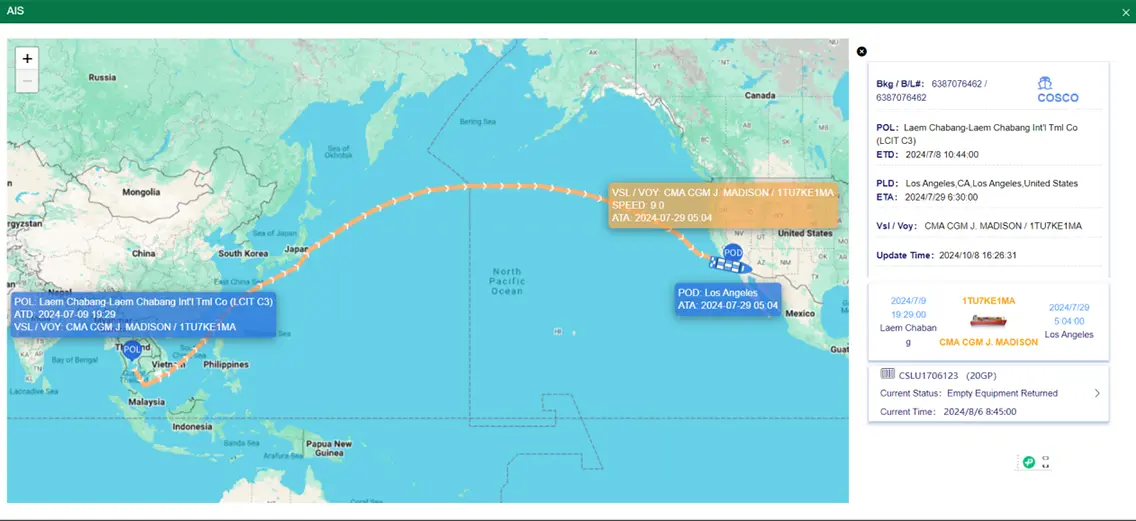
The platform achieves full chain data coverage from the source to the terminal through the collection and aggregation of data sources, including logistics information from various data sources such as stations, terminals, customs, shipping companies, and airlines.
Through the Trackingeyes’ Platform, customers can quickly connect with hundreds of global data sources, greatly improving the efficiency and intelligence of logistics tracking. Through API interface integration, the dynamics of goods can be automatically written back to internal systems and customer service systems of the enterprise, assisting global logistics enterprises, supply chain enterprises, cross-border e-commerce enterprises, software platforms and other enterprises to achieve more efficient and refined goods tracking management, and to do risk control and prediction in advance.
Unlock end-to-end visibility with our trusted tracking platform. We bring proven reliability to both ocean and air cargo tracking, giving you the accurate data and control needed to streamline operations from port to runway.
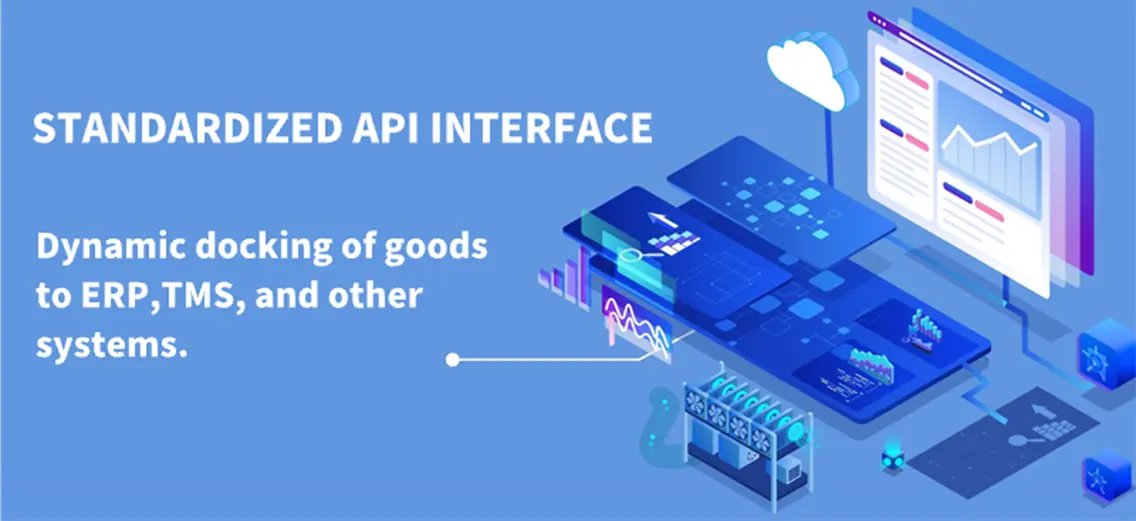
Our customized endpoints ensure seamless integrations for European freight networks. Connect your legacy platforms to automated milestones and reduce check-call costs by 80%.
Contact usExplore expert insights on implementing real-time ocean and air freight tracking APIs in Dutch logistics networks.
By combining real-time AIS vessel telemetry with Port of Rotterdam port management data, tracking platforms predict delays before ships reach the North Sea channels. This enables logistics managers to proactively reschedule inland transport (barge, rail, or road), minimize demurrage fees, and coordinate cargo pick-ups precisely.
Legacy EDI updates often run on rigid schedules, introducing delays of up to several hours. API connections enable instant transmission of milestone changes, allowing logistics systems to trigger alerts, generate invoices, and handle updates automatically.
Yes. The platform bridges ocean freight, inland waterway barges along the Rhine corridor, and European rail/freight links, offering a consolidated view of intermodal routes across central Europe.
We consolidate air cargo status updates directly from airlines, cargo handling systems, and local customs networks. This ensures that departures, arrivals, custom releases, and final deliveries are reported accurately and on time.
Standard REST API integrations are typically completed within 1 to 2 weeks, supported by our comprehensive developer documentation. Custom integrations with major ERP systems like SAP or Oracle usually take 4 to 6 weeks, depending on existing workflows.
Real-time telemetry, AIS integration tools, and schedule management APIs designed for global freight networks.
 Trackingeyes