Engineered to mitigate import delays, prevent demurrage at key terminals, and bring end-to-end transparency to South American trade lanes.
Navigating logistics in Argentina requires dealing with unique macroeconomic frameworks, changing regulatory protocols (such as SEDI import filings), and strict custom clearance constraints. Ports like Buenos Aires (TRP, Terminal 4), Campana, and the inland grain corridors along the Paraná River (Rosario Hub) demand absolute operational visibility. Demurrage costs accrue quickly, and currency control mechanisms dictate that every container delay translates into heavy financial penalties.
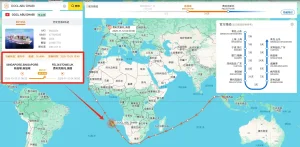
Globally, logistics systems are shifting from reactive milestones to predictive intelligence. By applying satellite and terrestrial AIS vessel data alongside machine learning models, businesses can anticipate delays before a vessel crosses the South Atlantic. Trackingeyes provides a bridge between global shipping networks and the localized commercial realities of the Southern Cone, ensuring that data is both highly accurate and contextually relevant for local compliance teams.
A summary of key friction points where automated shipment tracking minimizes operational risks:
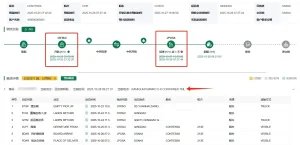
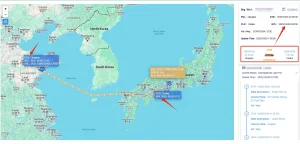
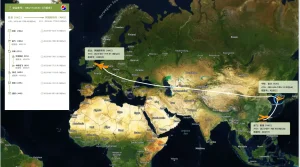
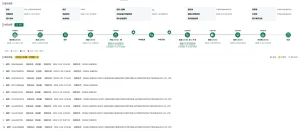
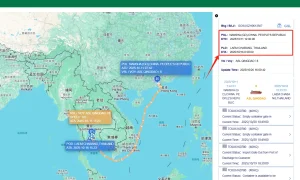
Combining multiple tracking layers into one interface, ensuring zero data drops from origin factory to destination terminal.
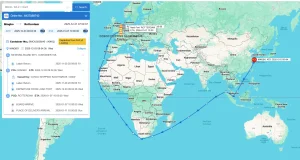
By combining satellite AIS feeds with local receiver stations along the Argentine coastline, we track ships entering the Rio de la Plata estuary and the Paraná River with minute-by-minute updates, bypassing traditional delay periods.
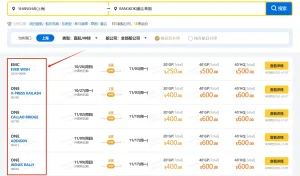
Using historical route data, local weather models, port congestion statistics, and terminal performance metrics, we calculate container-level ETA predictions that outperform traditional carrier estimates.
Standardized JSON outputs integrate into SAP, Oracle, or local Argentine systems. Automated updates minimize manual container lookups and improve system synchronization.
Fully compatible with global ocean routes, inland transport nodes, and regional South American port terminals.
How Trackingeyes addresses supply chain issues across Argentina’s key manufacturing and export regions.
Mendoza wineries require temperature-controlled reefer container monitoring from the winery to the Port of Buenos Aires or Valparaíso. Our system tracks terminal arrival times and port gate-in status to prevent transit delays and maintain wine quality.
Automakers operate on strict Just-In-Time schedules. A delayed shipment of parts can stop production lines. Our real-time tracking provides early notifications of route changes or port delays, allowing logistics teams to reschedule shifts or arrange alternative transport.
The Paraná River accounts for the majority of Argentina’s agricultural exports. Our AIS vessel tracking monitors river traffic, draft conditions, and queue patterns at Rosario grain terminals, helping operators schedule barge and ocean vessel loading efficiently.
Detailed tracking interfaces and data sets to improve end-to-end cargo visibility.
Our focus is on introducing advanced data models and sensor integrations for South American trade lanes.
Integrating domestic freight tracking and border crossing statuses for trucks running between Brazil, Paraguay, Uruguay, and Argentina, creating a unified cross-border dashboard.
Supporting real-time temperature, humidity, and door-opening sensors for reefer cargo and high-value manufacturing inputs entering Argentine territory.
Deploying machine learning models to assess terminal congestion patterns and weather forecasts, providing early warnings for trade delays in the South Atlantic.
Founded in 2015, Trackingeyes is a provider of global end-to-end logistics tracking and supply chain visualization solutions. With a founding team boasting over ten years of logistics expertise, we focus on resolving key industry pain points. We specialize in global end-to-end cargo tracking by sea and air, serving import and export enterprises worldwide.
The platform aggregates data sources from stations, terminals, customs, shipping lines, and airlines. Through the Trackingeyes Platform, customers can connect with hundreds of global data sources, helping improve logistics efficiency.

"Through API interface integration, cargo updates can be automatically written back to internal enterprise systems and customer service desks. This helps global logistics providers, supply chain operators, cross-border e-commerce businesses, and software platforms achieve more refined cargo tracking, enabling proactive risk control and planning."
Global Shipping Carriers Integrated
AIS Vessel Telemetry Monitoring
ETA Prediction Accuracy Rate
Ports and Rail Nodes Covered Globally
Quick answers regarding container tracking integration, ocean shipping, and local Argentine customs coordination.
Our platform provides automated ETA alerts and terminal gate-in/gate-out tracking. By alerting your customs brokers and logistics coordinators up to 72 hours before the vessel arrives, you can prepare documentation and submit customs declarations earlier. This minimizes container dwell times and helps prevent expensive terminal demurrage fees.
Yes. Our tracking platform uses AIS telemetry to monitor vessels traveling the Paraná River, including access to major terminals in San Lorenzo and Rosario. We track vessel movements, draft levels, and local berthing schedules to help grain exporters manage cargo operations.
Yes. We provide JSON-based APIs that link with domestic enterprise platforms, global ERP solutions (like SAP and Oracle), and proprietary warehouse management systems. This allows tracking data to update directly within your existing business workflows.
Yes. Trackingeyes supports both ocean container tracking and air freight tracking in a single, unified interface. We track shipments from major global air hubs directly into Ezeiza International Airport (EZE) in Buenos Aires.
Connect with our technical integration team today to request a demo of our API platforms and learn about container tracking setups.
Send Inquiry Now Trackingeyes