Deploying intelligent data feeds to mitigate cargo failure, optimize sailing schedules, and establish robust end-to-end monitoring.

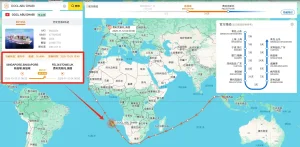
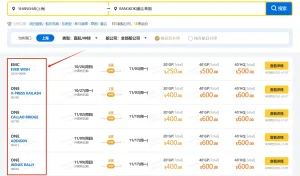
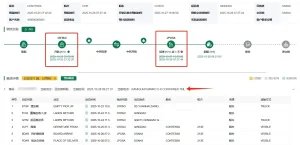
As the metropolitan powerhouse representing more than 22 million consumers, Mexico City (CDMX) and its surrounding industrial corridors—including Tepotzotlán, Cuautitlán Izcalli, and Tlalnepantla—represent the primary consumption engine and logistical heartland of North America's southern frontier. Driven by the massive macroeconomic shift toward nearshoring under the USMCA (T-MEC) treaty framework, CDMX has transformed into a critical nexus where intermodal freight routes converge.
Cargo destined for the Mexico City metropolitan area primarily enters via massive deepwater maritime gateways like the Port of Manzanillo on the Pacific Coast and the Port of Veracruz on the Gulf of Mexico. From these marine gateways, cargo is funneled inland through highly active rail lines and highway systems to major inland distribution hubs like the Pantaco Rail Terminal in Azcapotzalco. Additionally, air freight operations have seen a structural migration toward Felipe Ángeles International Airport (AIFA), which now acts as the primary dedicated cargo port for the Valley of Mexico, supplementing the traditional Mexico City International Airport (AICM).
The centralized customs clearance and container terminal processing rail cargo coming from Lázaro Cárdenas and Veracruz directly into the heart of CDMX.
Navigating the dual-airport framework of Mexico City requires integrated, real-time air cargo milestone tracking to avoid warehouse storage overages.
Highways like Federal Highway 57 (Querétaro-Mexico City) present persistent bottlenecks. Real-time predictive ETAs are critical for dispatch security.
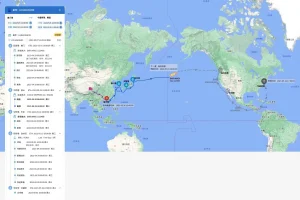
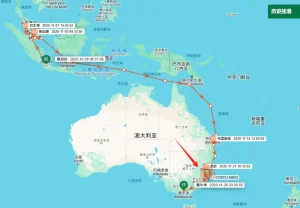
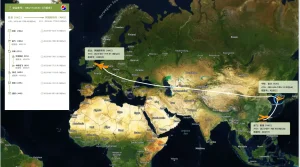
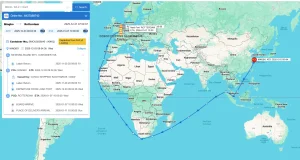
For multinational corporations operating within this ecosystem, tracking shipments is not merely about knowing where a container sits; it is a vital operational safeguard. High traffic congestion, customs clearance complexity at port of entry, and cargo security concerns along the inland corridors demand sophisticated, reliable Shipment Tracking Services that combine maritime AIS, intermodal rail status, and last-mile trucking data into a single, unified data stream.
The commercial synergy between China's industrial manufacturing base and the Mexican market has reached unprecedented heights. Chinese factories are key suppliers of automotive components, electronics, industrial machinery, and consumer goods destined for distribution in Mexico City. However, managing a supply chain that spans over 12,000 kilometers of ocean transit and complex inland routes requires state-of-the-art technological oversight.
By leveraging Chinese advanced manufacturing capabilities alongside specialized maritime tracking technologies, global enterprises gain key strategic advantages:
Our system integrates directly with China’s main export terminals and maritime carriers, bridging the geographic gap and putting complete supply chain visibility directly into the hands of logistics managers in Mexico City.
The global logistics industry is moving away from passive tracking methods—where systems merely report historical milestones—and embracing active, predictive, and sensor-driven visibility. Historically, shippers relied on manual check-calls or basic EDI status updates, which were often delayed by 12 to 24 hours. In today's fast-moving market, such latency can lead to severe warehouse disruptions.
Modern tracking platforms are built on integrated data frameworks that combine multiple technologies:
"Due to high congestion at the Port of Manzanillo and cargo safety risks along the Querétaro-CDMX corridor, having real-time data is essential for our security planning. It allows us to schedule armed escorts and secure warehouse space exactly when the cargo arrives, preventing target exposure."
Operating within the Mexican supply chain presents unique operational challenges. Below is a detailed breakdown of how our advanced tracking services address these issues, helping companies improve efficiency and reduce costs.
| Typical Logistics Challenge | Impact on Business Operations | How Trackingeyes Solves It |
|---|---|---|
| Customs Delays at Manzanillo / Veracruz | Extended wait times lead to storage fees (demurrage) and disrupt inland transport schedules. | Automated, real-time alerts warn operations teams hours before the vessel arrives, allowing them to pre-file customs paperwork. |
| Cargo Theft on Inland Routes | High-risk corridors (like Hwy 150D and Hwy 57) pose safety risks for drivers and cargo. | Geofenced route tracking triggers instant alarms if a truck deviates from its route or stops unexpectedly. |
| High Demurrage & Detention Fees | Delayed container returns lead to unexpected carrier penalties. | The system tracks container statuses in real time, automatically notifying teams of remaining free days. |
| Inefficient Warehouse Planning | Poor scheduling leads to high labor costs and congested receiving bays in CDMX. | Predictive ETA algorithms provide accurate arrival windows, allowing warehouses to optimize staff schedules. |
For enterprise procurement officers, investing in a tracking platform requires a clear understanding of its cost structure and service level agreements (SLAs). Our pricing models are designed to scale with your business, from small startups to multinational corporations, offering clear, predictable options.
Founded in 2015, Trackingeyes is a leading provider of global end-to-end logistics tracking and supply chain visualization solutions. With a founding team boasting over ten years of logistics expertise, we deeply understand industry pain points. We specialize in global end-to-end cargo tracking by sea and air, serving thousands of import and export enterprises worldwide. Our services include customizable tracking solutions and open API data interfaces to enhance supply chain visibility and operational efficiency.


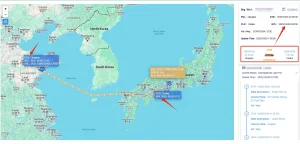
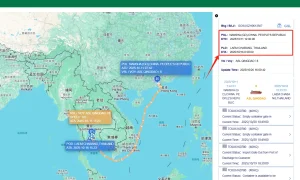
The platform achieves full chain data coverage from the source to the terminal through the collection and aggregation of data sources, including logistics information from various data sources such as stations, terminal, customs, shipping companies, and airlines. Through the Trackingeyes’ Platform, customers can quickly connect with hundreds of global data sources, greatly improving the efficiency and intelligence of logistics tracking.
Through API interface integration, the dynamics of goods can be automatically written back to internal systems and customer service systems of the enterprise, assisting global logistics enterprises, supply chain enterprises, cross-border e-commerce enterprises, software platforms and other enterprises to achieve more efficient and refined goods tracking management, and to do risk control and prediction in advance.
Unlock end-to-end visibility with our trusted tracking platform. We bring proven reliability to both ocean and air cargo tracking, giving you the accurate data and control needed to streamline operations from port to runway.
One of the costliest errors in logistics management is a pick-up failure at the destination port. In the Mexico City cargo framework, this often occurs due to lack of coordination between inland carriers and custom agents, delays in release notifications, or missing documentation.
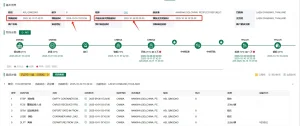
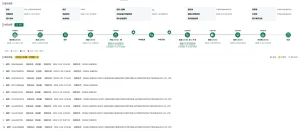
By integrating real-time tracking data into your operations, teams receive automated milestone notifications:
For manufacturers exporting high volumes of goods, keeping loading processes efficient is key to avoiding carrier penalties. Our data shows that delays during the initial leg of transport often trigger a chain reaction of missed windows down the line.
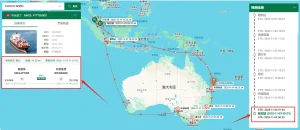
Using historic vessel scheduling data and port turn-times, companies can:
Deploying intelligent data feeds to prevent shipment failures, optimize routes, and establish robust end-to-end monitoring.
 Trackingeyes