Deploy localized APIs and visual tracking nodes customized to optimize the maritime and domestic networks radiating from the Port of Osaka.

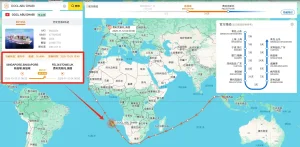
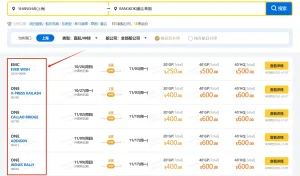
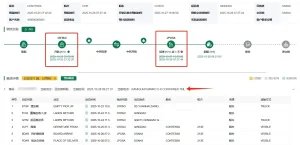
Osaka, as the economic engine of the Kansai region, serves as a vital gatekeeper for global maritime trade. Anchored by the Port of Osaka (Osaka-ko) and supported heavily by the intermodal capabilities of Kansai International Airport (KIX), the region constitutes an intricate manufacturing powerhouse. With sectors ranging from heavy chemicals, industrial precision machinery, electronics, and automotive parts, Osaka-based enterprises require surgical accuracy in logistics visibility to preserve lean manufacturing methodologies such as Just-in-Time (JIT) replenishment.
Historically, manufacturers relied heavily on manual data gathering, contacting carriers or freight forwarders individually. This fragmented approach created informational silos, leaving planners blind to ocean vessel delays, port congestions, or customs bottlenecks. Modern global trade, complicated by fluctuating fuel surcharges, environmental regulations, and geostrategic transit deviations, makes old manual tracking obsolete. Shippers require API integration, predictive AI, and centralized vessel telemetry to protect profit margins and meet contractual obligations.
Enterprise procurement departments, particularly those operating across the Pacific and Eurasian trade corridors, face consistent exposure to unexpected logistical variances. The financial consequences of supply chain exceptions extend far beyond transportation costs; they directly impact manufacturing uptime, warehousing overhead, and customer retention.
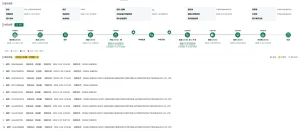
Unexpected port congestion at key destination terminals often triggers massive D&D charges. By utilizing early geofencing alerts and milestone updates, logistics teams can pre-arrange drayage and schedule local warehouse space dynamically, saving thousands of dollars per day.
Delays in customs clearance or failure to present documents in a timely fashion leads to pick-up failures. With integrated document verification milestones and automated alert setups, shippers maintain complete control over the pre-customs release phases.
Freight expenditures fluctuate drastically. Automatic rate-matching algorithms align historical transport cost records with dynamic ocean schedules, helping shippers in Osaka negotiate and source space at optimized price-to-transit profiles.
Examine our suite of software platforms, data API architectures, and localized operational control components engineered to integrate with existing SAP, Oracle, or customized systems.
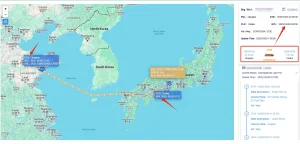
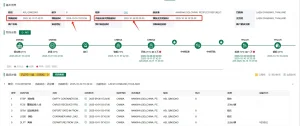
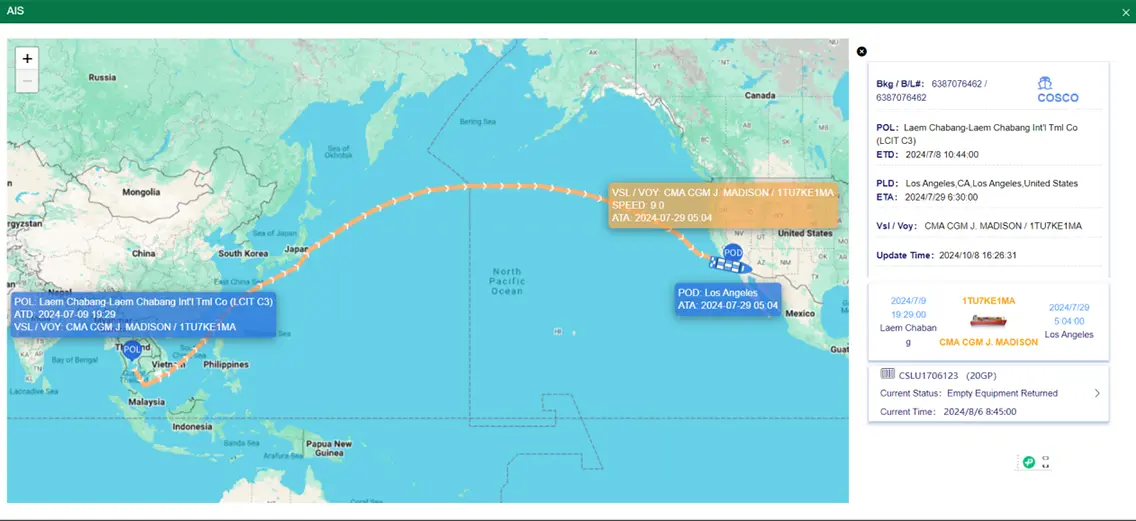
Our core technical advantage lies within the multi-source data fusion engine built on high-fidelity AIS data, port terminal operating systems (TOS), local rail databases, and global carrier API connections. Standard tracking systems rely simply on carrier EDI status updates, which are frequently delayed by 12 to 24 hours. Our engine processes signals in real time to bypass these latency issues.
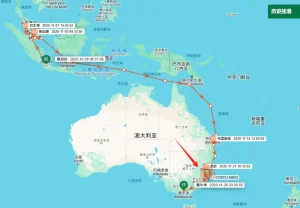
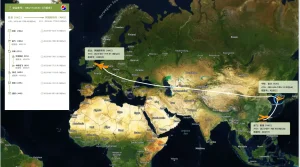
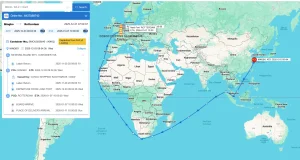
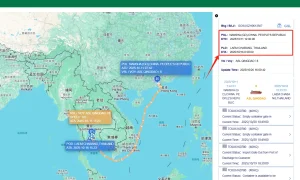
When a vessel departs the Port of Osaka, our systems monitor its journey using dynamic satellite-AIS tracking combined with maritime navigation algorithms. Our platform continuously calculates and recalculates estimated arrival schedules using historical port dwell indices, meteorological forecasts, and shipping lane congestion factors. The resulting API output feeds directly into your internal supply chain planning tools, creating a single, reliable point of truth across departments.
Different shipping lines use different formats. Our ingestion layer standardizes status events down to DCSA (Digital Container Shipping Association) guidelines, providing normalized data regardless of carrier.
Our platform automatically draws custom geofence perimeters around 8,000+ global container terminals, giving you instant alerts as soon as a vessel crosses from open ocean into harbor limits.
Our platform flags anomalies like route deviations, missed calls, and extended dwell times, letting your logistics coordinators resolve issues before they disrupt production timelines.
Founded in 2015, Trackingeyes is a leading provider of global end-to-end logistics tracking and supply chain visualization solutions. With a founding team boasting over ten years of deep logistics expertise, we understand the practical challenges of day-to-day operations. We specialize in global end-to-end cargo tracking by sea and air, serving thousands of import and export enterprises worldwide.
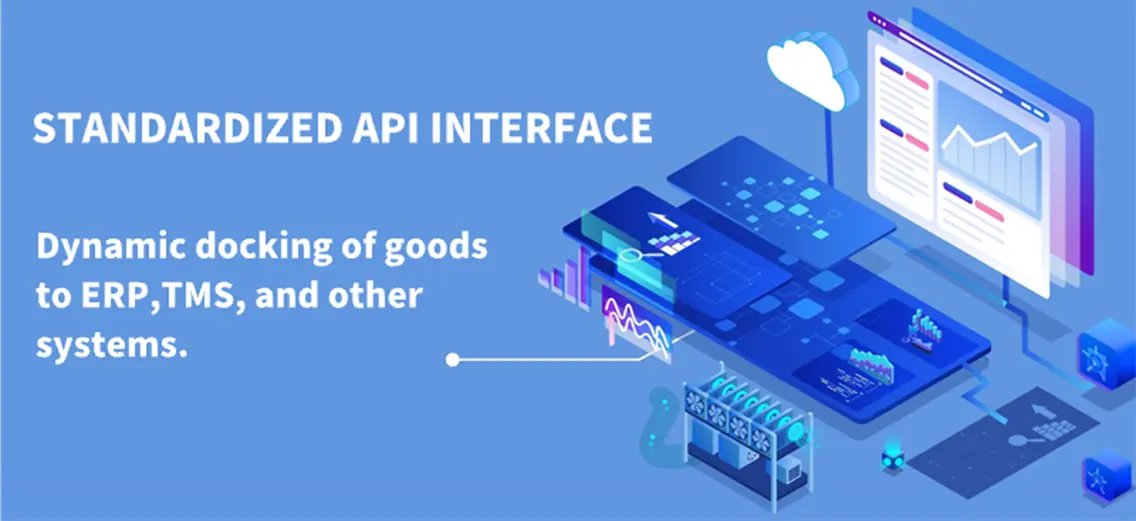
The platform achieves full-chain data coverage from origin to destination by collecting and aggregating logistics information from various data sources, including shipping stations, terminals, customs offices, sea lines, and airlines. Through the Trackingeyes Platform, customers connect quickly with hundreds of global data sources to improve their operational efficiency. Through our API interface, shipment status updates integrate directly into internal ERPs or customer service platforms, helping global logistics firms, supply chain enterprises, cross-border e-commerce operators, and software platforms mitigate risk, predict arrival times, and manage supply chain issues proactively.
Deploying digital logistics solutions in Japan requires strict alignment with national and regional data security protocols. Our platforms strictly adhere to the Act on the Protection of Personal Information (APPI) guidelines, ensuring all transport manifests, customer locations, and corporate shipping files are encrypted both in transit and at rest.
Our localized support desk assists Kansai-based businesses in both English and Japanese. We help you navigate regional cargo processes, Japan Customs compliance reporting, and terminal requirements for Osaka and Kobe. This helps smooth your transitions to digital supply chain systems while maintaining alignment with local regulatory bodies.
Integrate our low-latency APIs or visualization platforms with your ERP system to start monitoring your global freight movements today.
Request Developer API KeysBrowse our core tracking components, AIS vessel visualization tools, dynamic ETA systems, and air freight update architectures.
The global shipping sector is under pressure to decarbonize. Japanese initiatives and global ESG guidelines increasingly require manufacturers in the Kansai region to monitor their Scope 3 greenhouse gas emissions. Calculating shipping emissions requires accurate vessel routing logs, dynamic speed records, and wait-time statistics.
Our upcoming platform releases integrate CO2 emission calculators directly into the AIS vessel tracking engines. By referencing real-time fuel and machinery profiles alongside actual distance traveled, our system provides precise carbon footprint reporting per container. This helps Osaka-based manufacturers meet global compliance mandates while optimizing transport routes to reduce overall transit energy consumption.
 Trackingeyes