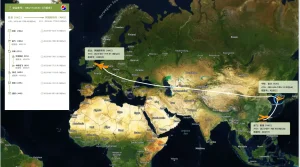
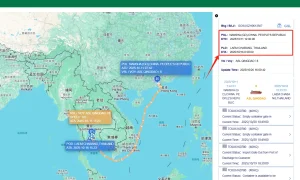
Immediate operational insights. Review our top-tier monitoring tools optimized for heavy industrial manufacturing, marine transit, and real-time scheduling alignment.
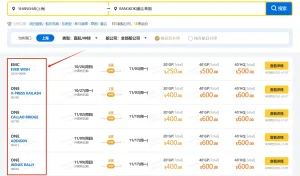
Unifying global ocean networks with regional industrial execution hubs.
As the energy capital of the world and a massive nexus for international trade, Houston, Texas, stands as one of the most critical supply chain gatekeepers globally. The Port of Houston handles millions of tons of cargo annually, ranging from complex oilfield machinery and petrochemical products to steel infrastructure, agricultural commodities, and heavy industrial vehicles. In this highly volatile logistic environment, minor delays at terminals such as Bayport or Barbours Cut can trigger compounding financial penalties downstream. For local energy equipment manufacturers and industrial distributors, accurate shipment tracking services are not merely a convenience; they are a fundamental operational safeguard.
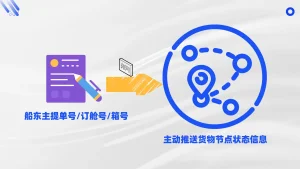
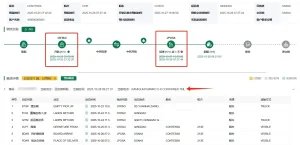
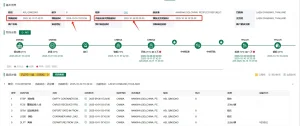
Integrating robust tracking services enables procurement managers to monitor high-value oilfield tools and structural components traversing global ocean corridors. With dynamic congestion at the Houston Ship Channel and evolving global maritime routes, relying on manual carrier updates invites significant risk. Our platform automates milestone tracking, offering real-time data inputs from global Automatic Identification Systems (AIS) networks, terminal operating systems, and customs declarations. This degree of transparency allows industrial teams to orchestrate warehouse operations, schedule labor for cargo discharge, and mitigate demurrage and detention fees.
Managing trans-pacific and trans-atlantic import routes into the Gulf Coast requires an advanced understanding of supply chain bottlenecks. When raw materials or heavy steel plates from international fabrication yards fail to arrive on schedule, manufacturing processes stall. Traditional tracking methods rely on batch EDI reports that are often delayed by 12 to 24 hours. During critical port delays, these gaps lead to missed production windows and failed container pick-ups at destination terminals. By implementing a centralized shipment tracking API, companies can automatically map carrier scheduling adjustments, verify port gate status, and initiate emergency drayage routing prior to detention penalties accruing.
The logistics technology landscape is transitioning away from siloed tracking spreadsheets toward dynamic, API-driven architectures. Our roadmap focuses heavily on combining high-frequency AIS signals, IoT container telematics, and machine learning models trained on historical port congestion cycles. This ensures that the ETA provided is not merely the carrier's estimated date, but a predictive analysis reflecting port backlogs, weather conditions along the maritime route, and canal transit times.
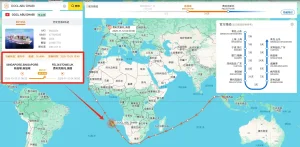
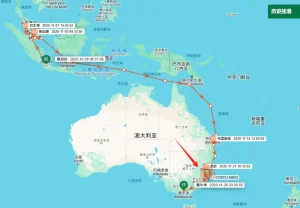
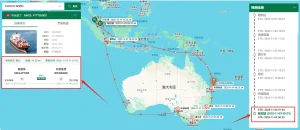
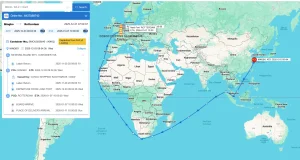
By capturing dual-frequency AIS telemetry from terrestrial stations and low-Earth-orbit satellites, our tracking platform displays exact maritime coordinates, routing alterations, and vessel speed adjustments. This directly counters the common "black box" phase of ocean shipping.
Using advanced algorithms, we process multi-source inputs—historical transit averages, terminal delays, and seasonal weather patterns—to generate high-precision predictive ETAs that regularly outperform baseline carrier projections.
In the upcoming phases of global logistics orchestration, open RESTful APIs will serve as the bridge between legacy enterprise resource planning (ERP) systems and real-time transit telemetry. Shippers can integrate cargo locations directly into SAP, Oracle, or customized proprietary logistics dashboards. This architecture enables automated triggers—such as sending custom alerts to destination consignees, booking secondary domestic freight haulers, and updating financial systems when cargo crosses key geo-fenced coordinates.
Modern global manufacturing projects require coordinated oversight across multiple freight modalities. Heavy equipment components may originate in deep inland fabrication hubs, move by rail to ocean terminals, cross oceans, and transition back to regional rail or flatbed road networks. A breakdown in tracking continuity at any of these interchange points risks derailment of the entire assembly timeline.
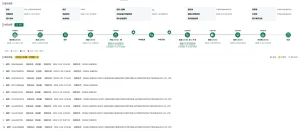
To address this, our platform integrates North American Class I rail networks (including Union Pacific and BNSF routes connecting directly into the Gulf Coast) with global marine carriers and air cargo systems. This unified visibility layer translates disparate tracking protocols into a standardized timeline. Logistics managers can track structural steel or precision machinery from a remote production floor in East Asia all the way to a job site in the Permian Basin via the Port of Houston, without switching platforms or manual data entries.
Operating within the United States maritime and interstate system demands compliance with a complex network of regulations, including the Jones Act, Federal Maritime Commission (FMC) rules, and U.S. Customs and Border Protection (CBP) declarations. Our systems are engineered to facilitate compliance by integrating import clearance milestones (such as CBP 10+2 Importer Security Filings and customs entry releases) directly alongside transit statuses.
Having real-time validation of customs clearance is critical when planning container retrieval at Houston terminals. A missed container pick-up due to outstanding customs holds can incur substantial daily fees. By integrating automatic alerts that ping drayage dispatchers the instant a container receives both customs clearance and terminal release, you eliminate communication lag and reduce operational friction.
As industrial sourcing remains deeply tied to advanced manufacturing centers in East Asia, tracking the raw material pipeline out of China’s Factory 4.0 centers is paramount. Smart factories in China utilize integrated IoT, robotics, and cloud-enabled production planning to expedite heavy industrial outputs. However, these efficiency gains at the factory level are often neutralized if the transit phase remains opaque.
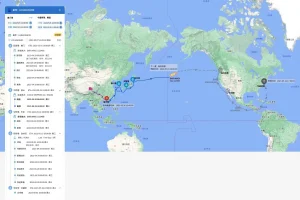
Our tracking solution bridges the gap between advanced Chinese manufacturing centers and North American industrial buyers. By deploying tracking interfaces directly at production exit points, we monitor cargo from the initial loading docks in Ningbo, Shanghai, or Shenzhen, tracking the intermodal journey through international waters and straight to the receiving bay in Houston. This uninterrupted visibility ensures that the agile benefits of China's Factory 4.0 are fully realized in domestic procurement cycles, fostering resilience against global supply shocks.
Enterprise procurement departments evaluating tracking service vendors prioritize system reliability, security protocols, and integration speed. To satisfy strict Service Level Agreements (SLAs) and corporate IT standards, our platform maintains a 99.9% API uptime, offers SOC 2-compliant data storage, and provides robust end-to-end data encryption. Large-scale procurement teams can rely on a consistent, secure flow of telemetry data to inform business-critical purchasing decisions and evaluate vendor performance accurately over time.
Founded in 2015, Trackingeyes is a leading provider of global end-to-end logistics tracking and supply chain visualization solutions. With a founding team boasting over ten years of logistics expertise, we deeply understand industry pain points. We specialize in global end-to-end cargo tracking by sea and air, serving thousands of import and export enterprises worldwide. Our services include customizable tracking solutions and open API data interfaces to enhance supply chain visibility and operational efficiency.
The platform achieves full chain data coverage from the source to the terminal through the collection and aggregation of data sources, including logistics information from various data sources such as stations, terminals, customs, shipping companies, and airlines. Through the Trackingeyes’ Platform, customers can quickly connect with hundreds of global data sources, greatly improving the efficiency and intelligence of logistics tracking.
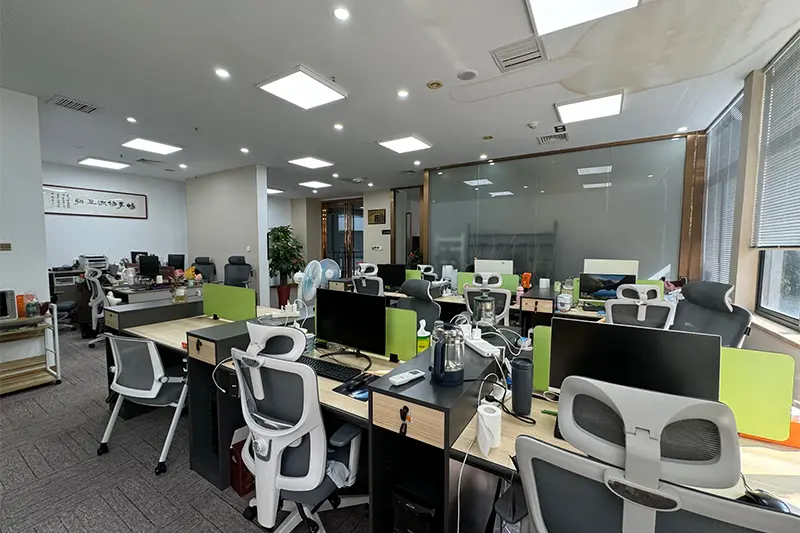

Reliable ocean & air cargo tracking for a smoother supply chain. Unlock end-to-end visibility with our trusted tracking platform. We bring proven reliability to both ocean and air cargo tracking, giving you the accurate data and control needed to streamline operations from port to runway.
"Through API interface integration, the dynamics of goods can be automatically written back to internal systems and customer service systems of the enterprise, assisting global logistics enterprises, supply chain enterprises, cross-border e-commerce enterprises, software platforms and other enterprises to achieve more efficient and refined goods tracking management, and to do risk control and prediction in advance."
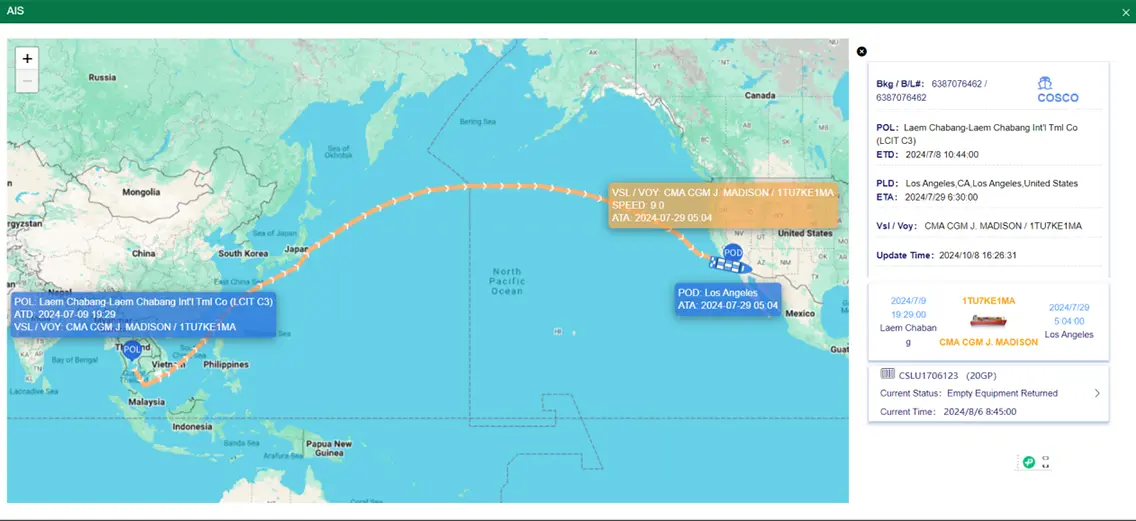
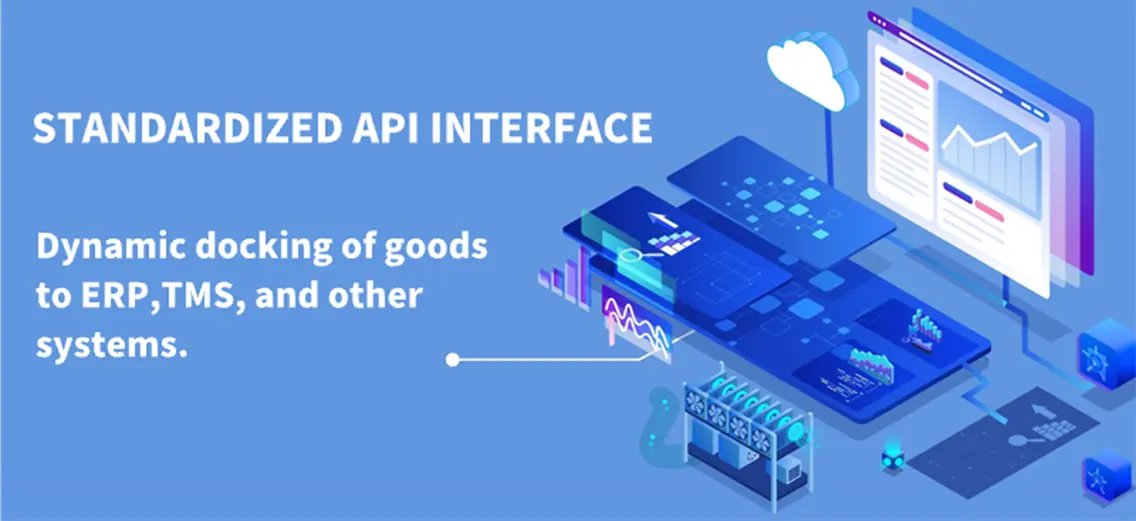
Explore our full suite of technical integrations, data tracking APIs, and ocean monitoring dashboards designed for enterprise logistics efficiency.
Clear, authoritative insights addressing procurement requirements, integration parameters, and localized services.
Get in touch with our team of logistics system engineers for custom API integration options, detailed enterprise pricing, and a free operational demo tailored to your Houston manufacturing needs.
 Trackingeyes