Real-time ocean telemetry, port status alerts, and predictive scheduling engines customized for the United States logistics market.
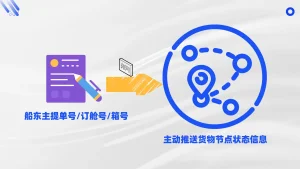
Mitigate cargo failures and eliminate demurrage risks at major hubs like Long Beach and Savannah with deep-dive diagnostic alerts.
Inquire Details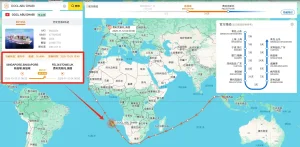
Get accurate updates for ATD and ATA timestamps using dual terrestrial-satellite AIS vessel tracking networks.
Inquire Details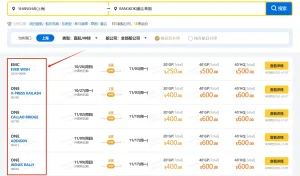
Leverage smart algorithms to pair maritime container routes with live spot rates on the Asia-US Trade Lane.
Inquire Details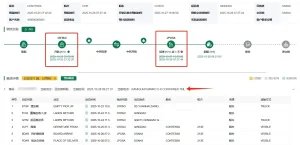
Proprietary neural networks calculate realistic arrivals at inland rail ramps, distribution centers, and marine ports.
Inquire DetailsAnalyzing the macroeconomic and operational forces driving the requirement for high-fidelity shipment tracking.
The logistics network of the United States handles trillions of dollars of goods annually, representing a highly complex web of marine hubs, Class I rail networks, interstate highways, and regional air hubs. However, vulnerability to disruptions—ranging from port congestion at the San Pedro Bay Complex (Los Angeles and Long Beach) to intermodal rail chassis bottlenecks and extreme weather events—has rendered traditional tracking mechanisms obsolete. Today, static tracking relying on manual carrier updates no longer meets the operational expectations of modern supply chains.
To maintain competitiveness, logistics operations must transition from reactive tracking to proactive visibility. Over the last decade, US manufacturers, retail distributors, and third-party logistics (3PL) providers have shifted their focus to semantic search parameters, dynamic data APIs, and real-time telemetry. In this high-stakes environment, data accuracy determines the margins of success, especially when managing demurrage fees, terminal handling costs, and inventory replenishment cycles.
Under the regulatory oversight of the Federal Maritime Commission (FMC) and frameworks like the Ocean Shipping Reform Act (OSRA), cargo shippers are demanding unprecedented billing transparency from ocean carriers. Accurately proving when a container was available for pickup requires verified data trails, making third-party shipment tracking services a mission-critical tool for legal compliance and cost containment.
How modern IoT sensors, satellite AIS data, and APIs build a comprehensive visual supply chain.
Vessels transmit status messages containing dynamic data, including ship ID, position, speed, heading, and cargo type. These transmissions are captured by both low-Earth-orbit satellites and land-based stations. Advanced tracking engines aggregate these signals to compute the coordinates of cargo vessels, circumventing the delays typical of carrier-reported milestones.
By layering AIS data over virtual geographic boundaries (geofences) around major shipping channels and marine terminals, tracking algorithms instantly log arrival events (ATA) and departure events (ATD). This enables automated invoicing and real-time yard management adjustments.
Ocean tracking must align seamlessly with inland operations. API endpoints allow manufacturers to stream live container status milestones directly into ERPs (SAP, Oracle, Microsoft Dynamics) and TMS suites.
This integrated data pipeline is critical for North American rail transport (BNSF, UP, CSX, NS), where intermodal transfers require precise timing. Without automated API updates, containers can sit on chassis for days, generating unnecessary storage charges.
Seamless data pipeline connections for existing enterprise resource planning software.
Automate scheduling workflows with live API feeds delivering verified vessel routes directly to internal tools.
Inquire Details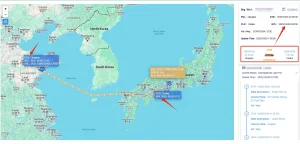
Integrate real-time mapping, cargo status flags, and delay predictions into legacy ERP software ecosystems.
Inquire Details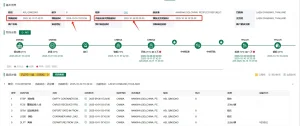
Accurately calculate loading sequences and terminal wait times to prevent expensive compliance penalties.
Inquire Details
Track container movements across Class-1 rail networks and inland terminals for end-to-end supply chain visibility.
Inquire DetailsWhy sourcing tracking solutions and digital infrastructure from China delivers unparalleled value and performance.
China's role as the world's primary manufacturing hub has catalyzed the development of a highly sophisticated domestic logistics technology sector. Chinese tech providers benefit from operating within the world's busiest marine trade lanes, allowing them to test and refine tracking algorithms on massive datasets. This scale offers clear operational advantages:
Partnering with a specialized provider like Trackingeyes allows North American organizations to combine cost-effective technology with localized customer service. This approach provides the clear visibility needed to manage transpacific shipping lanes and reduce administrative overhead.
Tailored tracking solutions addressing the specific operational demands of major American industries.
Automotive assembly plants operate on low inventory margins. Precise ETA tracking of raw parts helps plant managers schedule production runs, avoid expensive line stoppages, and coordinate local truck dispatch.
For pharmaceuticals and temperature-sensitive food products, real-time sensor data provides continuous monitoring of climate conditions. This data trail helps companies comply with FDA regulations and verify product safety upon arrival.
By integrating port opening alerts with transport dispatch systems, importers can pull containers from the terminal during free-time windows, eliminating expensive storage fees and carrier penalties.
Deep answers to complex logistics tracking, data integration, and compliance questions.
Our complete range of real-time container tracking, AIS systems, and global logistics visibility products.
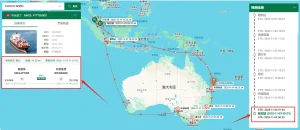
Leverage China's extensive AIS telemetry to monitor ships traveling transpacific corridors before they arrive in US waters.
Inquire Details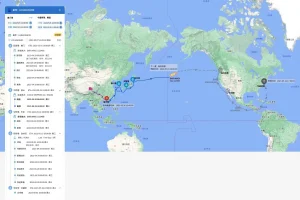
Monitor gate opening windows and cargo cut-off times to secure container dispatch and avoid late-delivery penalties.
Inquire Details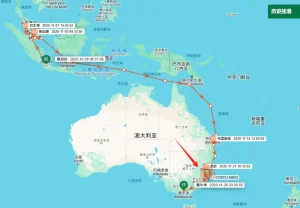
Integrate dynamic global maps with active vessel coordinates for a highly visual command center experience.
Inquire Details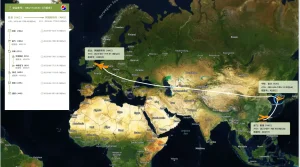
Track high-value air shipments with real-time flight updates, landing status, and customs clearance alerts.
Inquire Details
Combine ocean vessel metrics with inland status updates to manage transpacific shipping workflows from a single screen.
Inquire Details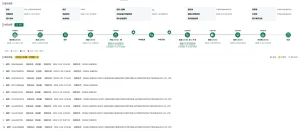
Use historical routing datasets and predictive mapping to optimize shipping lanes and avoid bottleneck areas.
Inquire Details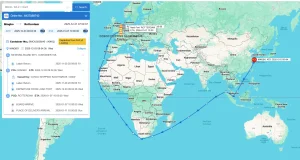
Automate customer alerts and downstream operations with dynamic container status updates.
Inquire Details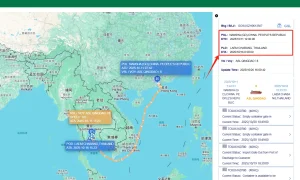
A comprehensive shipment visibility platform that links initial cargo dispatch with final destination delivery.
Inquire DetailsFounded in 2015, Trackingeyes is a provider of global end-to-end logistics tracking and supply chain visualization solutions. With a founding team bringing over ten years of logistics expertise, we focus on addressing common industry visibility pain points. We specialize in global cargo tracking by sea and air, serving import and export enterprises worldwide. Our services include customizable tracking solutions and open API data interfaces designed to enhance supply chain visibility and operational efficiency.
Our platform consolidates data from multiple sources, including terminals, customs, ocean carriers, and airlines, to provide comprehensive tracking coverage. By connecting users to hundreds of data points, Trackingeyes helps companies streamline their logistics tracking and operate with greater predictability.



Connect with our technical integration experts to request custom API documentation, coordinate pilot programs, or obtain specialized rate options.
 Trackingeyes