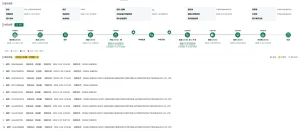
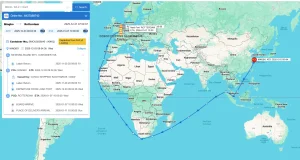
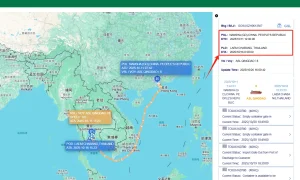
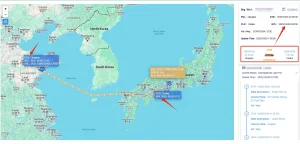
Real-time terminal visibility, AIS live tracking, and advanced predictive ETA algorithms configured specifically for South Asian trade lanes.
Pakistan sits at the geopolitical crossroads of South Asia, Central Asia, and the Middle East. With major ocean terminals such as the Karachi Port Trust (KPT), the deepwater terminals of Port Muhammad Bin Qasim, and the rapidly growing Gwadar Deep Water Port under the China-Pakistan Economic Corridor (CPEC), Pakistan serves as a pivotal maritime conduit. However, legacy tracing infrastructure has historically plagued exporters and manufacturers within this market.
Exporters in Pakistan's primary manufacturing hubs—such as the textile conglomerates in Faisalabad, Lahore, and Karachi—have long contended with unpredictability at ocean terminals. Key issues like container roll-overs, unpredictable customs check times within the Web Based One Customs (WeBOC) system, and lack of direct integration with shipping lines' active Automatic Identification System (AIS) transponders result in significant overheads.
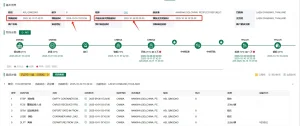
For industrial buyers, accurate shipment tracking is no longer an optional luxury; it is the cornerstone of risk management. Demurrage and detention fees accrue at Karachi’s ports due to lack of visibility on Container Gate-In/Gate-Out timings and inaccurate estimated times of arrival (ETA). This underscores the urgency of deploying automated ocean-freight tracking APIs to replace manual container tracking.
"By establishing automated multi-source tracking solutions, Pakistan's industrial enterprises can reduce container idle times at terminals by up to 34%, eliminating millions of rupees in unnecessary detention costs annually."
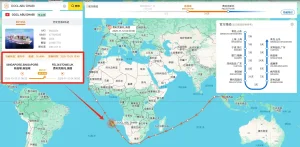
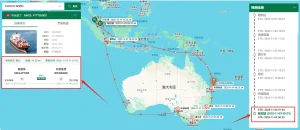
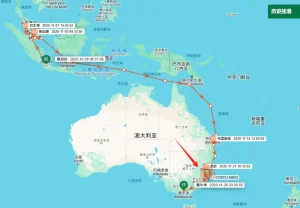
Global container shipping is experiencing unprecedented volatility. Rerouting around the Cape of Good Hope, regional conflicts, and unexpected congestion at major transit hubs have rendered traditional carrier-provided ETAs unreliable. To mitigate this risk, global tracking services leverage multi-source data: blending space-borne and terrestrial AIS, port terminal status updates, and custom milestone data.
In the Pakistani context, local firms must integrate their systems with these global data networks to maintain resilience. Using APIs that feed real-time coordinates, sailing schedules, and container milestones directly into enterprise ERP systems ensures that downstream manufacturing processes run seamlessly, minimizing supply chain disruptions.
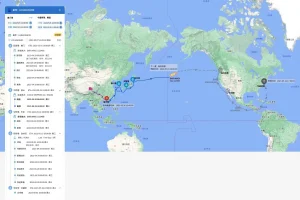
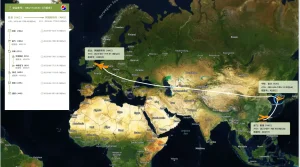
Connecting legacy systems with global shipping visualizers, providing complete end-to-end transparency.
Implementing tracking services in Pakistan calls for deep technical understanding of local logistics customs. Consider three major cargo corridors where real-time visibility prevents costly disruptions:
Trackingeyes' proprietary technology architecture integrates physical satellite tracking with complex predictive models. Rather than relying solely on carrier data (which is often delayed by 12 to 24 hours), the Trackingeyes system operates via a three-tier tracking hierarchy:
| Data Tier | Source Components | Latency | Optimal Use Cases |
|---|---|---|---|
| Tier 1: Global Space AIS | Satellite + Terrestrial AIS Transponders | < 15 Minutes | Mid-Ocean Tracking & Route Deviation Warnings |
| Tier 2: Port API Integration | Direct TOS (Terminal Operating Systems) | Real-time | Container Gate-In/Out, Berth Allocation Alerts |
| Tier 3: Carrier EDI Nodes | ANSI X12 / EDIFACT 315 & API Feeds | 1 - 4 Hours | BL Issuance, Vessel Booking confirmations |
| Tier 4: Predictive AI | Machine Learning historical lane analysis | Instant | Predicting congested ports and delayed transshipments |
By consolidating these data feeds into a unified logistics database, Trackingeyes APIs provide a single source of truth for supply chains. Software developers in Pakistan can easily integrate this data into custom-built client portals, regional ERP solutions, or logistics command centers, ensuring unified and actionable shipment management.
Our robust network architecture powers global visibility for leading enterprises and logistics operations.
Founded in 2015, Trackingeyes is a leading provider of global end-to-end logistics tracking and supply chain visualization solutions. With a founding team boasting over ten years of logistics expertise, we deeply understand industry pain points. We specialize in global end-to-end cargo tracking by sea and air, serving thousands of import and export enterprises worldwide. Our services include customizable tracking solutions and open API data interfaces to enhance supply chain visibility and operational efficiency.
The platform achieves full chain data coverage from the source to the terminal through the collection and aggregation of data sources, including logistics information from various data sources such as stations, terminals, customs, shipping companies, and airlines. Through the Trackingeyes’ Platform, customers can quickly connect with hundreds of global data sources, greatly improving the efficiency and intelligence of logistics tracking.
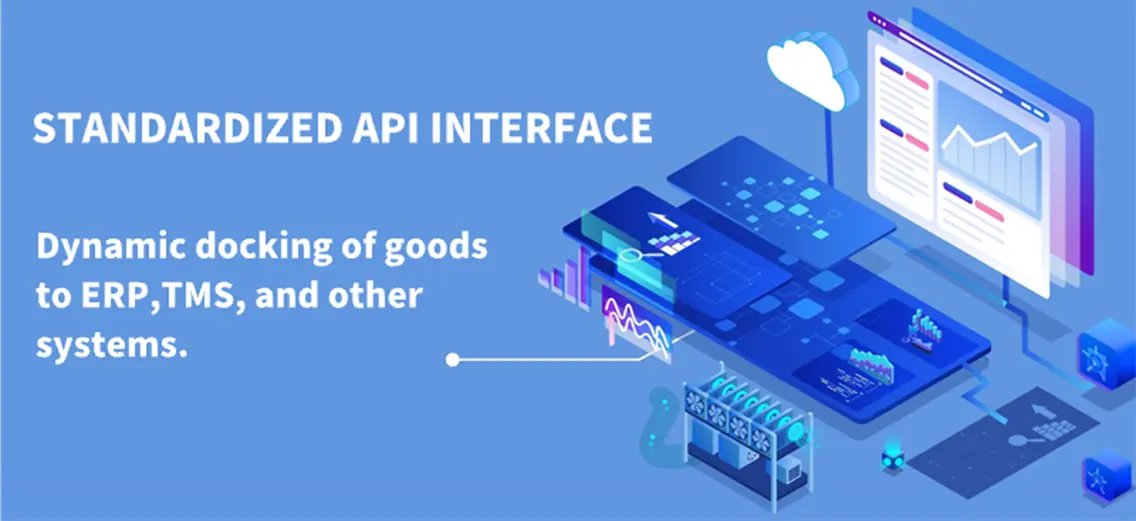
Through API interface integration, the dynamics of goods can be automatically written back to internal systems and customer service systems of the enterprise, assisting global logistics enterprises, supply chain enterprises, cross-border e-commerce enterprises, software platforms and other enterprises to achieve more efficient and refined goods tracking management, and to do risk control and prediction in advance.


Get authoritative answers regarding costs, APIs, integration methods, and local terminal compatibility.
Examine our complete suite of systems, software applications, and developer APIs for global trade logistics.
 Trackingeyes