Explore our premium suite of global transport visualization tools, designed to prevent disruptions and optimize operational pipelines.
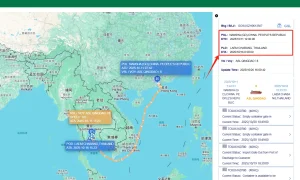
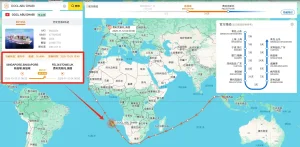
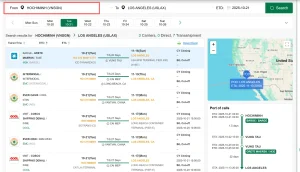
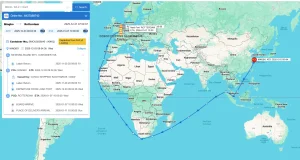
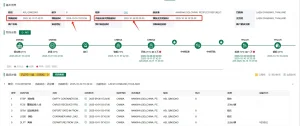
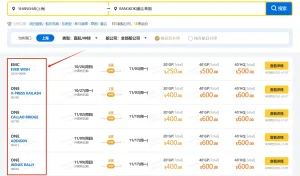
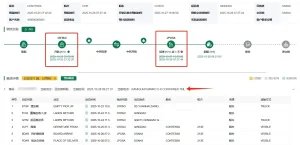
The global logistics industry is experiencing an unprecedented structural shift. Traditionally, tracking was characterized by passive "milestone-based" checks where updates were only logged during scans at key distribution centers. Today, global supply chains require continuous, real-time telemetry to manage risks effectively. The modern approach relies on dynamic sensors, Automatic Identification Systems (AIS), ADS-B aircraft data transponders, and GPS beacons. These systems transmit live data directly into centralized platforms, enabling logistics managers to track freight status minute-by-minute.
Industry Insight: Passive milestone updates are no longer sufficient. Supply chain leaders require sub-hourly data tracking to mitigate congestion and avoid costly port bottlenecks.
This evolution is driven by several key factors: the scale of containerization, complex multi-modal transfers, and the risk of localized disruptions. A single delay at a container port can disrupt manufacturing pipelines thousands of miles away. By integrating advanced analytics with raw tracking streams, companies transition from retrospective fire-fighting to proactive routing and predictive container management.
Founded in 2015, Trackingeyes is a leading provider of global end-to-end logistics tracking and supply chain visualization solutions. With a founding team boasting over ten years of logistics expertise, we deeply understand industry pain points. We specialize in global end-to-end cargo tracking by sea and air, serving thousands of import and export enterprises worldwide. Our services include customizable tracking solutions and open API data interfaces to enhance supply chain visibility and operational efficiency.
The platform achieves full chain data coverage from the source to the terminal through the collection and aggregation of data sources, including logistics information from various data sources such as stations, terminal, customs, shipping companies, and airlines.
Through the Trackingeyes’ Platform, customers can quickly connect with hundreds of global data sources, greatly improving the efficiency and intelligence of logistics tracking.


Unlock end-to-end visibility with our trusted tracking platform. We bring proven reliability to both ocean and air cargo tracking, giving you the accurate data and control needed to streamline operations from port to runway.
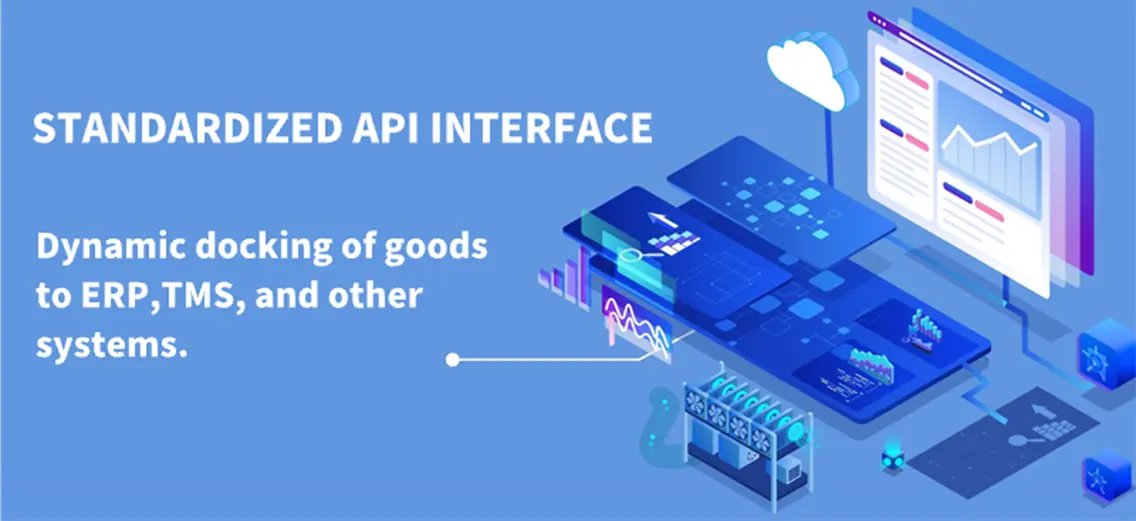
Operational Insight (Li Maotong, Co-founder): "Through API interface integration, the dynamics of goods can be automatically written back to internal systems and customer service systems of the enterprise, assisting global logistics enterprises, supply chain enterprises, cross-border e-commerce enterprises, software platforms and other enterprises to achieve more efficient and refined goods tracking management, and to do risk control and prediction in advance."
Global procurement teams face strict service level agreements (SLAs) and tight production schedules. To support lean manufacturing, companies require automated systems that update tracking data directly into their ERPs (such as SAP, Oracle, or customized internal systems). The demand goes beyond basic tracking; they need structured, high-frequency data streams that can feed risk models and predictive scheduling algorithms.
To address this, Trackingeyes offers a high-availability open API framework. This enables IT architectures to ingest structural tracking details, customs clearance updates, and port congestion indices directly. The API removes manual checkpoints and prevents data gaps across multi-country transit routes.
| Feature Parameter | Legacy Electronic Data Interchange (EDI) | Trackingeyes Open API Interface | Supply Chain Advantage |
|---|---|---|---|
| Update Frequency | Once every 12 to 24 hours | Near-Real-Time (Configurable up to 5 mins) | Enables immediate response to delays |
| Latency Overhead | Significant (Batch processing delays) | Minimal (< 15 seconds) | Accurate port and tarmac arrival updates |
| Predictive Insights | Manual intervention required | Machine learning automated ETA updates | Reduces demurrage and waiting times |
| Integration Effort | Custom, slow configurations | RESTful JSON standard integration | Rapid deployment with low IT overhead |
By leveraging standardized REST interfaces, companies can link ocean carrier AIS feeds, rail telemetry, and customs milestones directly into their shipping databases. This level of connectivity allows departments to predict shortages early, rearrange factory line priorities, and maintain consistent communication with end customers.
Modern supply chains depend on multiple transport modes working together. Products rarely travel via a single channel. An international shipment might start on a localized feeder ship, transfer to an ultra-large container vessel, land at an inland gateway port, travel by rail across countries, and finally arrive via short-haul trucking.
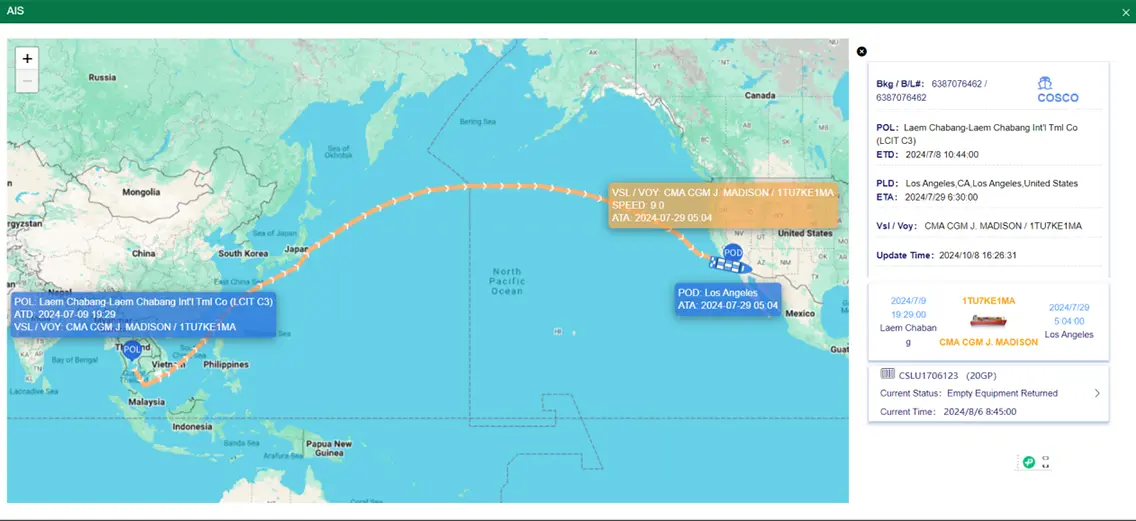
Utilizes global AIS transponder arrays, carrier vessel schedules, and deep-sea satellite feeds to pinpoint container locations, manage terminal arrivals, and predict berth congestion.
Tracks rail hubs and inland interchanges. Integrates directly with Class I rail lines to reduce bottlenecks at key junction points.
Monitors flight milestones and terminal handlers. Combines dynamic flight numbers with cargo details to keep tracking updated across long distances.
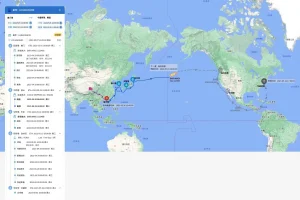
Trackingeyes unifies these modes under a single data standard. Instead of logging into multiple regional port and carrier systems, users receive a continuous status flow. This allows logistics teams to track a shipment from a factory floor in Shanghai, through the Pacific, across North American rail nodes, and onto a delivery truck, all on one dashboard.
Operating a global tracking network requires navigating complex international trade regulations and local data policies. Because logistics information passes through multiple jurisdictions, compliance is a core requirement.
Trackingeyes complies with global data security frameworks, including GDPR, CCPA, and regional cyber-security laws. Our servers process tracking telemetry securely, protecting sensitive corporate details and cargo lists. Additionally, we integrate regional shipping rule updates into our platform. This helps shippers avoid fines by warning them about custom changes or filing deadlines, such as the US Customs 24-Hour Rule (AMS) and the EU ICS2 regulation.
When issues arise—such as a failure to pick up cargo at a destination port due to missing paperwork or delayed container releases—our platform alerts managers immediately. Having localized data support team members in key regions helps resolve customs holds and prevent compounding storage fees.
Traditional ETA calculations are often unreliable, as they rely on simple distances and average speeds. They fail to account for variables like weather systems, port backlogs, custom delays, or low water levels in key canals. Trackingeyes addresses this by using machine learning models trained on historical shipping paths, port wait times, and weather patterns.
Our AI-driven scheduling engine continuously calculates ETA ranges based on live vessel speeds, marine conditions, and target terminal queues. If a ship slows down due to weather or faces a longer port queue, our system flags the potential delay before the carrier updates their official schedule. This gives logistics teams the lead time needed to adjust operations, reschedule warehouse labor, and keep clients updated.
Get answers to common technical and operational questions about Trackingeyes solutions.
Review our specialized tracking services and ERP integration solutions designed for high-volume enterprise shippers.

 Trackingeyes