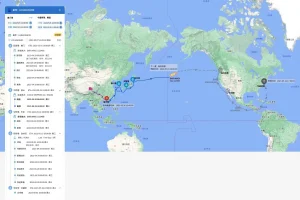
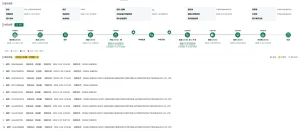
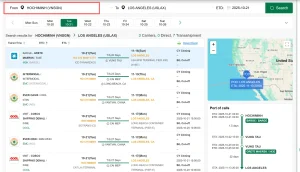
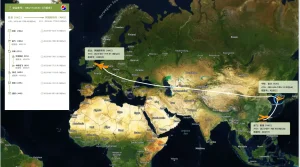
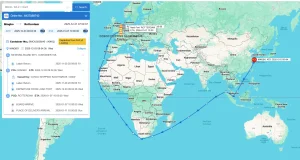
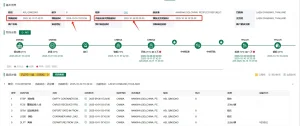
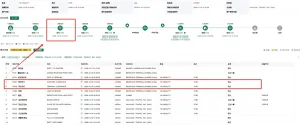
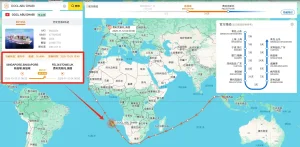
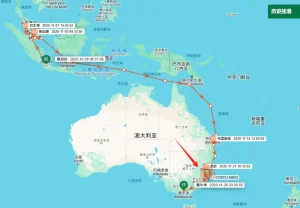
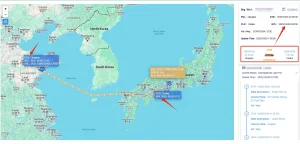
Deploy native APIs and visualization engines to achieve dynamic ETA updates, automated routing schedules, and transparent container audit logs.
In the modern era of logistics, container shipping and air freight are subject to constant geo-economic fluctuations, terminal strikes, and volatile weather. Reactive supply chains are facing unsustainable margins. Real-time, end-to-end (E2E) cargo intelligence is the only mechanism that protects bottom-line margins.
Unplanned demurrage and detention fees at maritime terminals account for billions of dollars in annual losses. By deploying early-warning alerts for port congestion, custom holds, and container discharge delays, global logistics coordinators can reduce target container dwell times by over 35%.
Modern supply chains do not rely solely on maritime lanes. To eliminate "dark zones," software infrastructures must integrate deep overland tracking networks. This includes North American rail nodes, European inner water canals, and complex last-mile warehouse handovers.
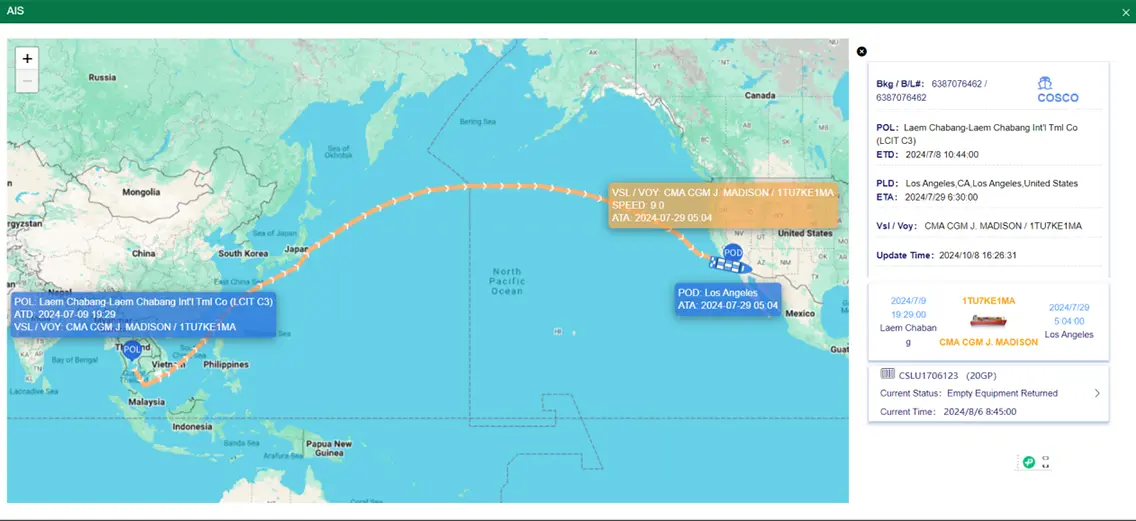
Basic tracking relies on scheduled manual EDI signals. Super Cargo Tracking utilizes dynamic sensor fusion—merging automated carrier schedules, terrestrial and satellite AIS vessel transponders, airport ground handling APIs, and active smart container GPS/IoT trackers.
Choose the optimization tier suited to your operations. From standard container updates to customized enterprise ERP API pipelines, our solutions scale dynamically with your volume.
| Tracking Level | Key Operations Included | Data Sources & Technology | Target Audience | Indicative Price Structure |
|---|---|---|---|---|
| Level 1: Core Ocean Tracker | Ocean Container Milestones (gate-in, load, discharge, gate-out). Automatic port delay alerts. | Direct shipping line EDI integrations, Port community schedules. | Mid-sized importers, Freight Forwarders. | Starting at $0.85 per Container (Tier discounts apply) |
| Level 2: Multimodal Smart Plus | Ocean tracking + North American & European inland rail interchanges, dry-port tracking. | AIS satellite vessel tracking, Class I Railroad interfaces, Customs APIs. | Global Manufacturers, Digital Brokers. | Custom contract based on annual container volume (TEU) |
| Level 3: Full Air & Sea API Suite | Sea & Air dynamic tracking, automated cargo status writebacks, advanced AI ETA predictions. | AIS + Ground Handling agents, Flight status APIs, ML-driven ETA models. | Enterprise ERP integration (SAP, Oracle, custom TMS). | SaaS license + API call bucket (Detailed quotes upon request) |
| Level 4: Custom Edge IoT Node | Active physical tracking of temperature, relative humidity, light sensor (open container), and 3D shocks. | Smart GPS/GSM container beacons, cellular mesh nodes, environmental sensor feeds. | Cold Chain Pharma, Aerospace, Luxury Brands. | Hardware lease options + Data transmission subscriptions |
How Trackingeyes converts raw logistical telemetry into actionable supply chain predictions.
Standard ETAs provided by carriers are notoriously inaccurate, often updated only after a vessel misses its window. Our system runs continuous Bayesian machine learning models. We cross-reference historic port queues, wind speeds, ship drafts, and actual steaming velocities to output real-time ETA alerts that outperform carrier estimates by up to 72 hours.
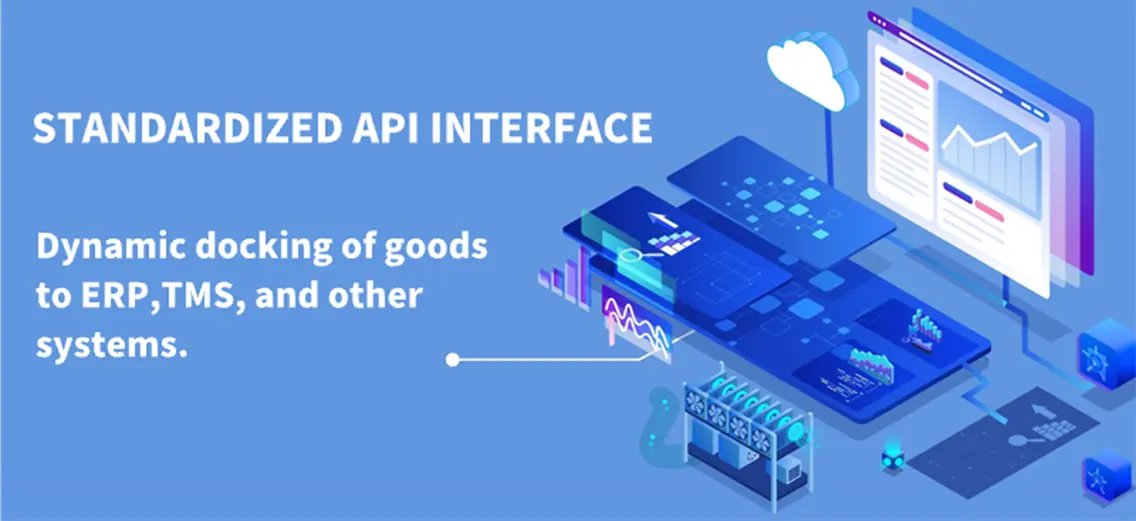
Say goodbye to polling APIs. Trackingeyes pushes instant JSON payloads directly to your system of record (SAP, CargoWise, Microsoft Dynamics, or custom-built in-house TMS) the moment a milestone occurs. This allows automatic triggering of downstream tasks, such as scheduling customs clearance, invoicing customers, or booking drayage.
Aligning with Scope 3 emission regulations. Future modules will match tracking telemetry directly with vessel fuel consumption signatures and engine telemetry. This provides manufacturers with verifiable CO2 equivalent calculations per container route, validating green logistics compliance.
Why direct integration with Chinese industrial clusters is the anchor of global maritime logistics.
China remains the undisputed manufacturing engine of the world. Global buyers, however, suffer from poor visibility in the critical "First Mile" phase—the gap between the factory warehouse gate and the container vessel loading ramp at major hubs like Shanghai, Ningbo-Zhoushan, or Shenzhen.
By leveraging Trackingeyes direct API infrastructure at these critical nodes, manufacturing plants can streamline their dispatch schedules. Key advantages include:
Our solutions bridge the physical distance between high-volume production facilities in China and western retail distribution networks, ensuring continuous inventory flow and lean buffer-stock thresholds.
Global operations require strict adherence to local laws, shipping codes, and security policies.
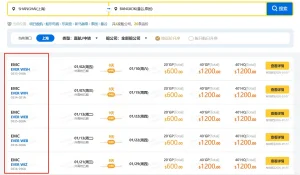
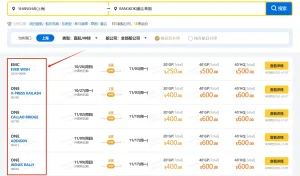
We ensure that our rate indexation and automated schedule pairings comply fully with Federal Maritime Commission (FMC) standards. Transparency in freight rates prevents unexpected surcharges and keeps your contracts legally sound.
Our data formats align with the European Union's Import Control System 2 (ICS2). Security declarations are verified against shipping schedules to prevent customs holds at European entry points like Rotterdam, Antwerp, or Hamburg.
Supply chain telemetry reveals sensitive business trends. Trackingeyes deploys enterprise-grade AES-256 encryption for all data transmissions, keeping proprietary commercial volumes, destination ports, and buyer patterns private.
Founded in 2015, Trackingeyes is a leading provider of global end-to-end logistics tracking and supply chain visualization solutions. With a founding team boasting over ten years of logistics expertise, we deeply understand industry pain points. We specialize in global end-to-end cargo tracking by sea and air, serving thousands of import and export enterprises worldwide. Our services include customizable tracking solutions and open API data interfaces to enhance supply chain visibility and operational efficiency.
The platform achieves full chain data coverage from the source to the terminal through the collection and aggregation of data sources, including logistics information from various data sources such as stations, terminals, customs, shipping companies, and airlines. Through the Trackingeyes’ Platform, customers can quickly connect with hundreds of global data sources, greatly improving the efficiency and intelligence of logistics tracking. Through API interface integration, the dynamics of goods can be automatically written back to internal systems and customer service systems of the enterprise, assisting global logistics enterprises, supply chain enterprises, cross-border e-commerce enterprises, software platforms and other enterprises to achieve more efficient and refined goods tracking management, and to do risk control and prediction in advance.



Expert answers to questions about APIs, data integrity, and operational bottlenecks.
Explore our complete range of tools designed to optimize cargo routes, reduce customs clearing delays, and upgrade legacy system capabilities.
 Trackingeyes