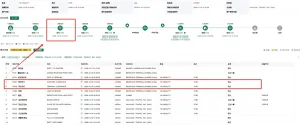
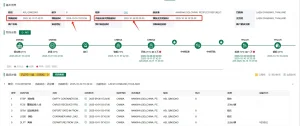
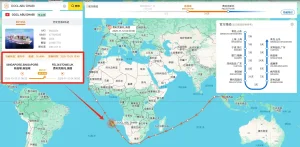
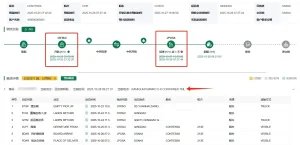
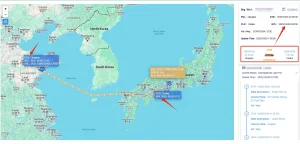
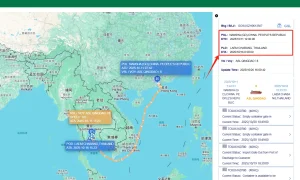
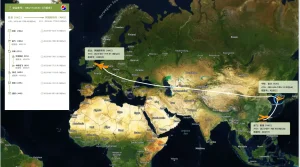
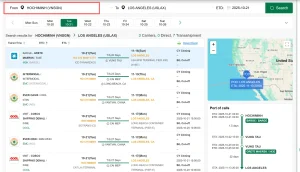
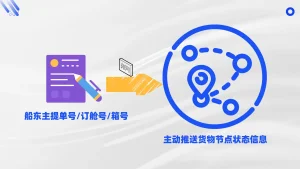
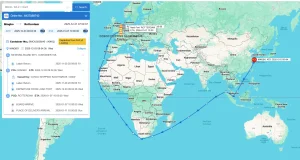
Integrate real-time tracking points, customs validation mechanisms, and automated maritime/aviation schedule APIs into your native ERP ecosystem.
In global air freight logistics, the 112 AWB prefix corresponds directly to China Southern Airlines (CZ), the largest commercial fleet operator in Asia. Navigating China’s air corridors demands high-fidelity milestone visibility. Enterprise supply chain managers, freight forwarders, and end-consumers utilize 112 AWB Tracking to monitor time-sensitive shipments originating from giant industrial hubs like Guangzhou Baiyun Airport (CAN), Shenzhen Bao'an (SZX), and Shanghai Pudong (PVG).
Trackingeyes closes the gap between raw unstructured carrier communications and structured enterprise datasets. Our system integrates multi-channel updates including Flight Status Update (FSU) messaging, Cargo-XML/EDI standards, and direct airport cargo ground handling warehouse telemetry. This allows logistics leaders to identify exactly when cargo transitions from the manufacturer's custody to customs checkpoints, and finally onto the plane.
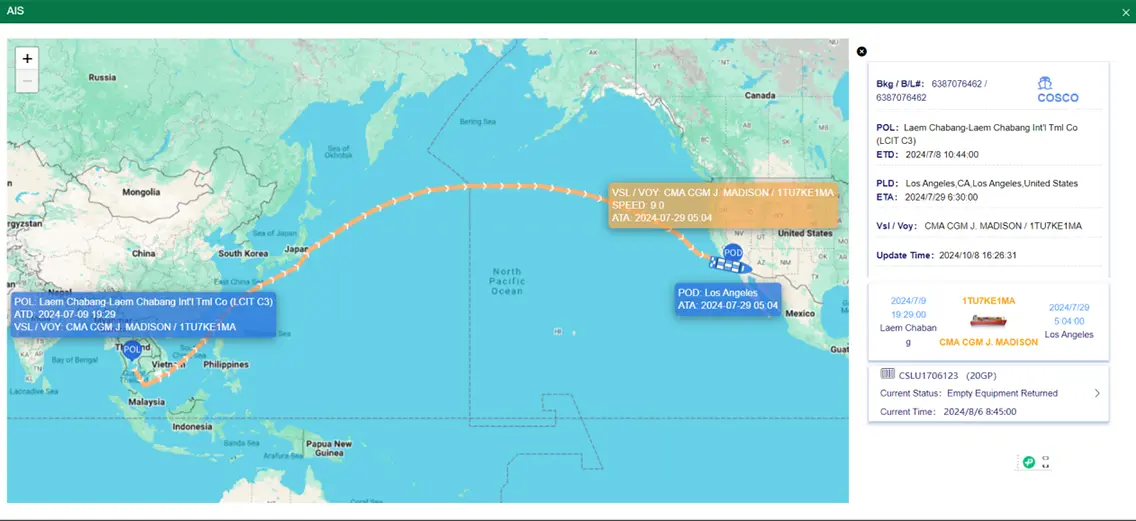
Our solutions provide Information Gain through multi-layered validation. When a CZ (112) cargo milestone is updated, Trackingeyes cross-references it with independent AIS vessel trackers, global rail nodes, and third-party flight path telemetry. The result is absolute data reliability and significantly reduced manual overheads.

Implementing raw AWB web-scraping fails when carriers change layouts or enforce anti-bot scripts. The Trackingeyes platform leverages direct EDI connections to guarantee structured data delivery.
Standardize your logistics software stack. Write back shipment milestones (RCS, DEP, ARR, DLV) automatically using single JSON calls. Say goodbye to querying disparate websites.
Fully compliant with the International Air Transport Association (IATA) data interchange standards, securing end-to-end transmissions of delicate trading manifests.
Our engine analyzes historical flight durations, airport congestion patterns, and weather disruptions to provide highly realistic arrival updates and warn of potential delay penalties.
| Milestone Code | Status Description | Data Source | Trackingeyes Action Trigger |
|---|---|---|---|
| RCS | Cargo Received from Shipper | CZ Warehouse System (Guangzhou/Shenzhen/Shanghai) | Confirm origin customs release sequence |
| RCT | Cargo Received from Transshipment Carrier | Global Terminal Operator Hub | Validate cross-border last-mile logistics sync |
| DEP | Aircraft Departed Origin Airport | Air Traffic Control & flight path monitoring | Generate real-time ETA countdown updates |
| ARR | Cargo Arrived at Destination Airport | Ground Handling Agent Telemetry | Dispatch destination port pickup alerts |
| NFD | Consignee Notified of Availability | Destination Carrier Cargo Terminal | Prevent warehouse storage penalty structures |
| DLV | Cargo Delivered to Ultimate Consignee | Last Mile GPS Carrier Integration | Complete supply chain visualization record |

China's export-driven economy demands robust logistics coordination. Electronics factories in the Pearl River Delta (Shenzhen, Dongguan) and industrial plants in Yangtze River Delta (Ningbo, Suzhou) rely on strict time schedules. Any disruption in air corridors results in costly halts. By deploying automated tracking for 112 prefix air waybills, enterprises can quickly adapt if a scheduled flight encounters delays.
Trackingeyes builds resilience directly into the shipping lifecycle. Through local operations in Xiamen and partnerships spanning key cargo centers, we offer native-speaker support to troubleshoot carrier booking updates. We bridge communication gaps during complex steps, including handovers between local Chinese factories and international airlines, ensuring that data is never lost due to language barriers or system incompatibility.
Choose from flexible, volume-based pricing models designed to suit growing operations, logistics software providers, and enterprise supply chains.
Industrial supply chains are no longer simple point-to-point processes. Modern operations rely on dynamic, multi-modal transport lines. A component might start on a vessel using AIS vessel tracking, move onto a fast freight train, and finish its journey via flight under a 112 AWB.
Trackingeyes is building a unified data engine to reflect this reality. By combining flight telemetry, AIS tracking, and rail milestone updates, we help logistics teams stay prepared. We prevent common points of failure, such as coordination issues at transfer hubs, so that shipments transition smoothly between modes.

Founded in 2015, Trackingeyes is a leading provider of global end-to-end logistics tracking and supply chain visualization solutions. With a founding team boasting over ten years of logistics expertise, we deeply understand industry pain points. We specialize in global end-to-end cargo tracking by sea and air, serving thousands of import and export enterprises worldwide. Our services include customizable tracking solutions and open API data interfaces to enhance supply chain visibility and operational efficiency.
The platform achieves full chain data coverage from the source to the terminal through the collection and aggregation of data sources, including logistics information from various data sources such as stations, terminal, customs, shipping companies, and airlines. Through the Trackingeyes’ Platform, customers can quickly connect with hundreds of global data sources, greatly improving the efficiency and intelligence of logistics tracking.
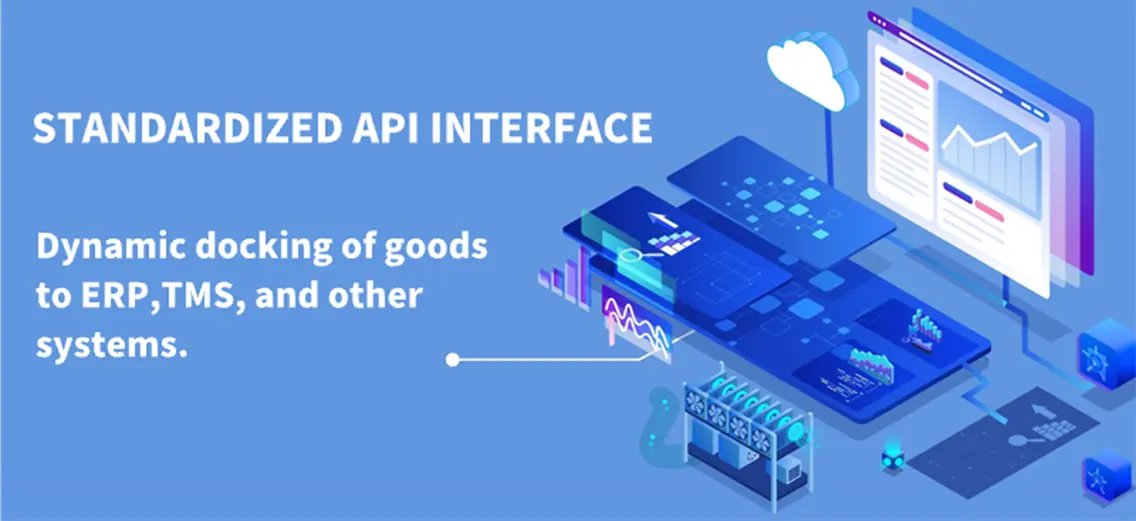
Through API interface integration, the dynamics of goods can be automatically written back to internal systems and customer service systems of the enterprise, assisting global logistics enterprises, supply chain enterprises, cross-border e-commerce enterprises, software platforms and other enterprises to achieve more efficient and refined goods tracking management, and to do risk control and prediction in advance.
Unlock end-to-end visibility with our trusted tracking platform. We bring proven reliability to both ocean and air cargo tracking, giving you the accurate data and control needed to streamline operations from port to runway.
Find answers to technical questions about 112 AWB tracking, API connections, and cross-border logistics visibility.
The "112" prefix is the unique three-digit airline identification number assigned by IATA to China Southern Airlines (CZ). When tracking air freight, entering the 112 prefix routing code allows logistics tracking engines to identify the carrier and query the correct airline networks for cargo milestones.
Trackingeyes offers standard RESTful JSON APIs and Webhooks. Once integrated, our system listens for updates and automatically pushes milestone data (like RCS, DEP, ARR) back to your internal TMS or ERP system, reducing manual entry.
Yes, we provide end-to-end visibility. The platform supports air waybill tracking, AIS ocean vessel tracking, and rail transport node status monitoring across major trade corridors, including North American and Eurasian rail hubs.
By providing early notifications (NFD and ARR milestones), our system alerts local teams as soon as the cargo is ready at the destination terminal. This helps prevent delays and costly demurrage charges.
We maintain a 99.9% uptime SLA through our redundant cloud infrastructure. The platform uses secure API endpoints and protocols compliant with local data regulations (GDPR, CCPA, and China's Data Security Law) to protect sensitive trading manifests.
Our data updates dynamically. Major airport cargo terminal updates and EDI milestones are parsed near real-time (typically within 2-5 minutes of being logged by airport or carrier networks).
Yes, we support over 1,500 logistics prefixes globally, including major European, North American, and Asian airlines, providing a single dashboard for multi-carrier logistics management.
Our platform cross-checks airline milestones with external sources, such as independent ADS-B flight paths and ground handling data, helping logistics teams catch and correct reporting errors.
Access to real-time schedule APIs helps freight planners adjust routes and carriers quickly when delay warnings or disruptions occur, keeping transit schedules on track.
Yes. Through our webhooks, users can set up customized alert notifications (via SMS, Email, or Slack) triggered by specific milestone developments or unexpected transit delays.
Ensure end-to-end visibility for high-volume cross-border trade with our core product offerings.
 Trackingeyes