

In the highly volatile landscape of global trade, traditional methods of logistics tracking have reached their limits. Legacy systems, heavily reliant on manual EDI (Electronic Data Interchange) transmissions and reactive status updates, fail to provide the agility required by modern enterprises. Today, the industry is experiencing a profound paradigm shift toward API-driven real-time data management.
By leveraging advanced Data Management APIs, global organizations can transition from passive monitoring to proactive orchestration. These APIs ingest millions of data points from terrestrial and satellite AIS transponders, port authorities, customs offices, and commercial airlines. The result is a unified, structured data stream that feeds directly into enterprise resource planning (ERP) systems, warehouse management systems (WMS), and transportation management systems (TMS).
This whitepaper explores how Trackingeyes' state-of-the-art API solutions enable organizations to eliminate blind spots, optimize working capital, and build resilient supply chains capable of weathering geopolitical, environmental, and operational disruptions.
Founded in 2015, Trackingeyes is a leading provider of global end-to-end logistics tracking and supply chain visualization solutions. With a founding team boasting over ten years of logistics expertise, we deeply understand industry pain points. We specialize in global end-to-end cargo tracking by sea and air, serving thousands of import and export enterprises worldwide. Our services include customizable tracking solutions and open API data interfaces to enhance supply chain visibility and operational efficiency.
The platform achieves full chain data coverage from the source to the terminal through the collection and aggregation of data sources, including logistics information from various data sources such as stations, terminal, customs, shipping companies, and airlines. Through the Trackingeyes’ Platform, customers can quickly connect with hundreds of global data sources, greatly improving the efficiency and intelligence of logistics tracking.


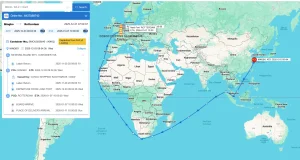
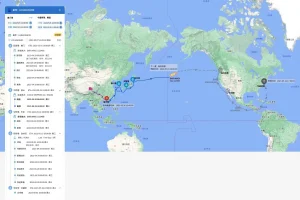
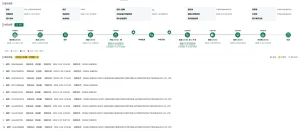
Unlock end-to-end visibility with our trusted tracking platform. We bring proven reliability to both ocean and air cargo tracking, giving you the accurate data and control needed to streamline operations from port to runway. Through API interface integration, the dynamics of goods can be automatically written back to internal systems and customer service systems of the enterprise, assisting global logistics enterprises, supply chain enterprises, cross-border e-commerce enterprises, software platforms and other enterprises to achieve more efficient and refined goods tracking management, and to do risk control and prediction in advance.
The future of logistics data management lies in the convergence of machine learning, edge computing, and real-time streaming architectures. Trackingeyes is actively pioneering this transition through a structured three-phase technical roadmap designed to elevate data accuracy and integration simplicity.
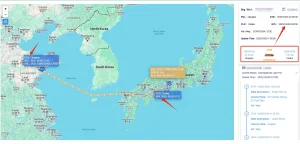
Integrating historical transit patterns, real-time weather anomalies, and port congestion metrics into a proprietary machine learning model. This allows our API to predict container arrival times with up to 94% accuracy, far surpassing standard carrier estimates.
Moving beyond simple location tracking to environmental monitoring. Our next-generation API endpoints will ingest and correlate temperature, humidity, shock, and light exposure data from smart container sensors, providing a holistic view of cargo health.
To ensure absolute data integrity and tamper-proof compliance records, we are developing blockchain-backed verification layers for customs documentation and chain-of-custody handovers, simplifying cross-border audits.
By adopting a RESTful architecture with JSON payloads, and preparing for gRPC and GraphQL support, Trackingeyes ensures that developers can implement our endpoints with minimal latency. Our focus remains on reducing the time-to-first-call to under 15 minutes, backed by comprehensive SDKs in Python, Java, and Go.
Different industries face distinct supply chain challenges. A generic tracking tool is insufficient for complex global operations. Trackingeyes provides tailored data management solutions that address the specific operational pain points of key macroeconomic sectors.
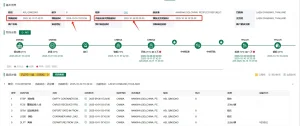
Automotive assembly lines operate on razor-thin inventory margins. A delay of a single container carrying critical microchips or engine components can halt production, costing millions of dollars per hour. Trackingeyes' Port Opening Alert & Cut-off Tracking API provides precise, real-time alerts, allowing logistics managers to dynamically reroute shipments or adjust production schedules before a bottleneck occurs.
For cross-border e-commerce, consumer satisfaction depends heavily on delivery predictability. Our Automatic ETA Updates API feeds directly into consumer-facing tracking portals, reducing "Where is my order?" (WISMO) customer service inquiries by up to 40%. Additionally, integration with destination customs services ensures smooth last-mile delivery transitions.
Temperature-sensitive pharmaceuticals require continuous monitoring and rapid transit. By combining our Air Freight Data API with real-time flight tracking and customs clearance alerts, pharmaceutical distributors can ensure that life-saving vaccines and medicines are cleared and transported within strict temperature windows, preventing costly product spoilage.
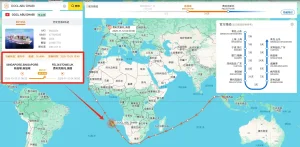
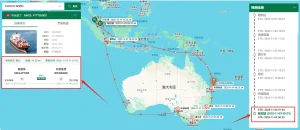
Legacy ERP systems often lack native visualization tools for maritime logistics. Trackingeyes acts as an intelligent visual engine, upgrading existing ERP structures with real-time AIS vessel tracking and automated sailing schedule matching, turning static databases into dynamic decision-making hubs.

As the world's manufacturing powerhouse, China is at the forefront of the Industry 4.0 revolution. Smart factories, automated ports, and digital customs networks generate vast amounts of data. However, extracting value from this fragmented ecosystem requires deep local integration and technical expertise.
Trackingeyes bridges the gap between Chinese manufacturing hubs and global procurement networks. Our API integrates directly with major Chinese port authorities (including Shanghai, Ningbo-Zhoushan, and Shenzhen), local customs systems, and domestic feeder networks. This localized data access ensures that global buyers receive instant updates the moment their cargo leaves the factory floor, enters the port gate, or clears export customs.
By utilizing our China Vessel AIS Value and Advantages, international enterprises can mitigate risks associated with port congestion, seasonal weather disruptions (such as typhoons), and local regulatory changes, securing a highly resilient supply chain.
Operating a global supply chain means navigating a complex web of regional regulations, data sovereignty laws, and localized operational practices. Trackingeyes is committed to providing robust compliance frameworks alongside dedicated local support to ensure seamless global operations.
We strictly adhere to international data protection standards, including GDPR (Europe), CCPA (United States), and China's Data Security Law (DSL). All data transmitted through our APIs is encrypted using TLS 1.3 in transit and AES-256 at rest, ensuring your proprietary supply chain intelligence remains secure.
To minimize latency and guarantee high availability, Trackingeyes operates distributed server clusters across North America, Europe, and Asia-Pacific. Our intelligent routing automatically directs API calls to the nearest regional node, maintaining sub-second response times worldwide.
Technical integration requires expert guidance. Our global support team consists of experienced solutions architects fluent in English, Chinese, and Spanish. We offer 24/7 SLA-backed support for enterprise clients, ensuring rapid resolution of any integration or data discrepancies.
For procurement officers and IT directors, selecting the right logistics data partner is a critical decision. A poor choice can lead to integration delays, inaccurate data, and ballooning operational costs. When evaluating Data Management APIs, consider the following technical and commercial benchmarks:

 Trackingeyes