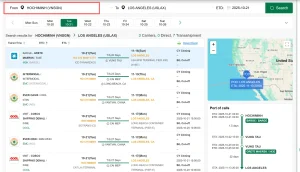
Integrate our advanced automated tracking services to eliminate transit blind spots and dynamic delays.
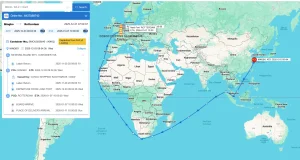
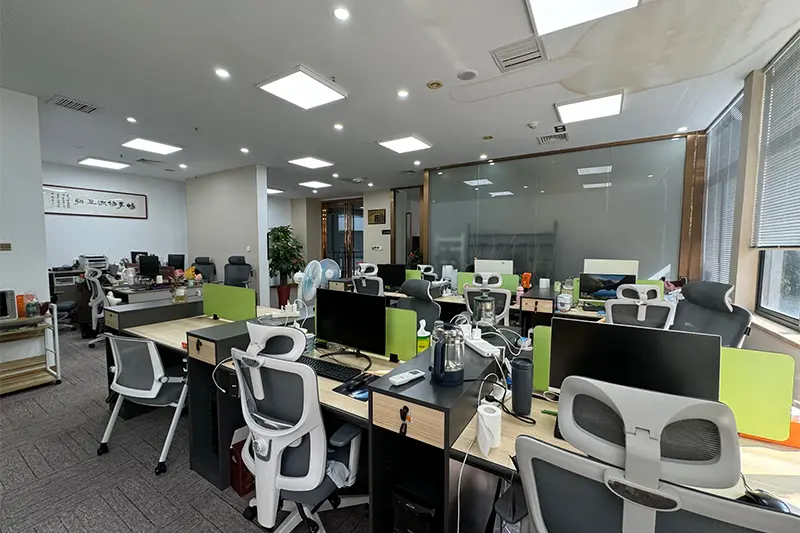
Founded in 2015, Trackingeyes is a leading provider of global end-to-end logistics tracking and supply chain visualization solutions. With a founding team boasting over ten years of logistics expertise, we deeply understand industry pain points.
We specialize in global end-to-end cargo tracking by sea and air, serving thousands of import and export enterprises worldwide. Our services include customizable tracking solutions and open API data interfaces to enhance supply chain visibility and operational efficiency.
Through the Trackingeyes’ Platform, customers can quickly connect with hundreds of global data sources, greatly improving the efficiency and intelligence of logistics tracking.


How dynamic Online-to-Offline (O2O) data orchestration is reshaping modern supply chain resilience.
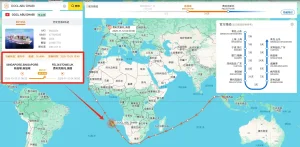
Global supply chains are increasingly vulnerable to black swan events, port strikes, and route diversions. The Cargo Tracking 020 standard blends physical sensor readings (offline) with digital API aggregation (online) to offer high-fidelity visibility.
Modern enterprises no longer rely on manual updates. By standardizing status updates directly from port gates and ocean carriers, supply chain managers receive proactive alerts to mitigate demurrage, detention, and route failures.
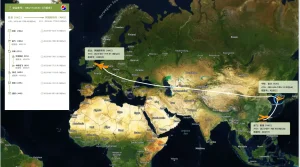
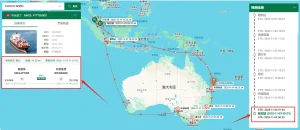
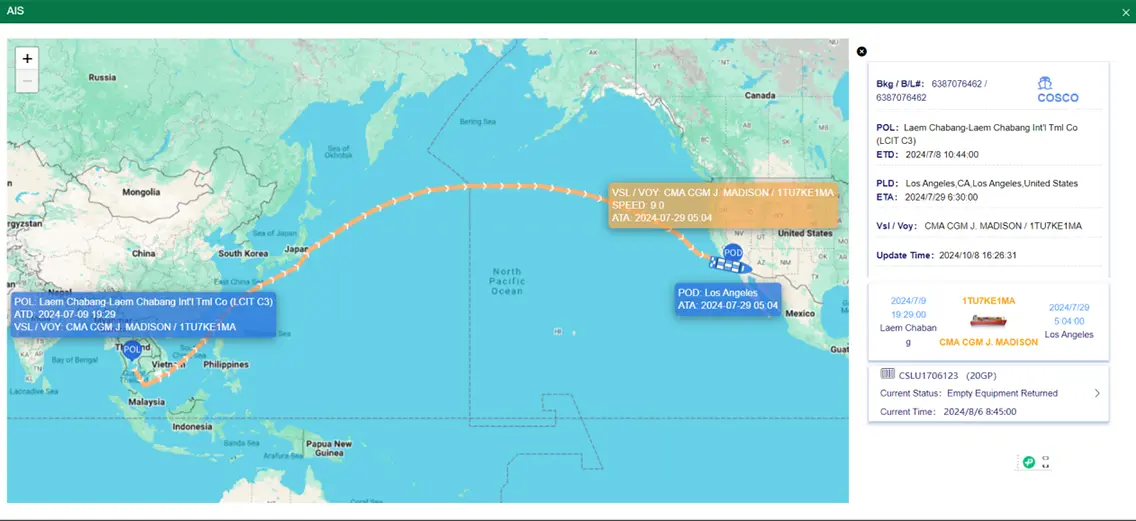
Leveraging deep learning, our AI engines synthesize weather patterns, historical terminal performance, and AIS telemetry to predict true Estimated Times of Arrival (ETA), outperforming legacy carrier estimates by up to 40%.
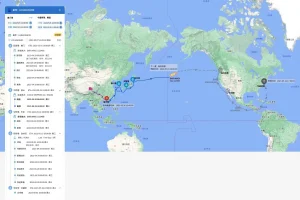
The O2O Paradigm Shift: By marrying digital tracking protocols with hard hardware telemetry (AIS, IoT sensors on containers, and GPS tracking transponders), Cargo Tracking 020 eliminates the typical 12 to 24-hour information latency associated with traditional carrier manual reporting.
Discover why real-time data integration at China's major export hubs reduces downstream buffer stock requirements.
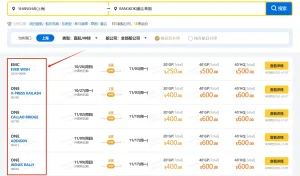
China is the cornerstone of global manufacturing. The efficiency of ports such as Ningbo-Zhoushan, Shanghai, and Shenzhen dictates global inventory levels. However, without automated tracing at the source, overseas importers suffer from sudden "loading failures" or unexpected customs holds.
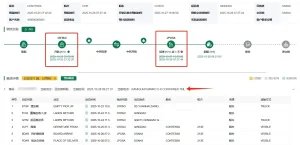
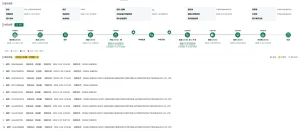
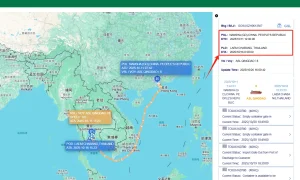
Our localized connection with Chinese logistics networks enables immediate data capture. From the moment the cargo leaves the factory gate to its container gate-in at the ocean terminal, data is synced live. This early visibility gives procurement officers the leverage to adjust downstream logistics schedules before ships even leave the port of origin.
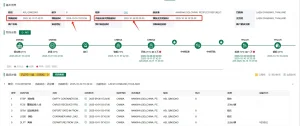
Furthermore, accurate estimation of loading times prevents manifest filing delays. Failure to comply with strict timing rules, such as the 24-hour advanced manifest rule, leads to heavy customs penalties and container roll-overs. Our algorithms calculate the optimal container entry window to optimize terminal dwell time.
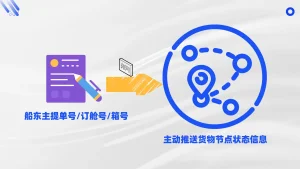
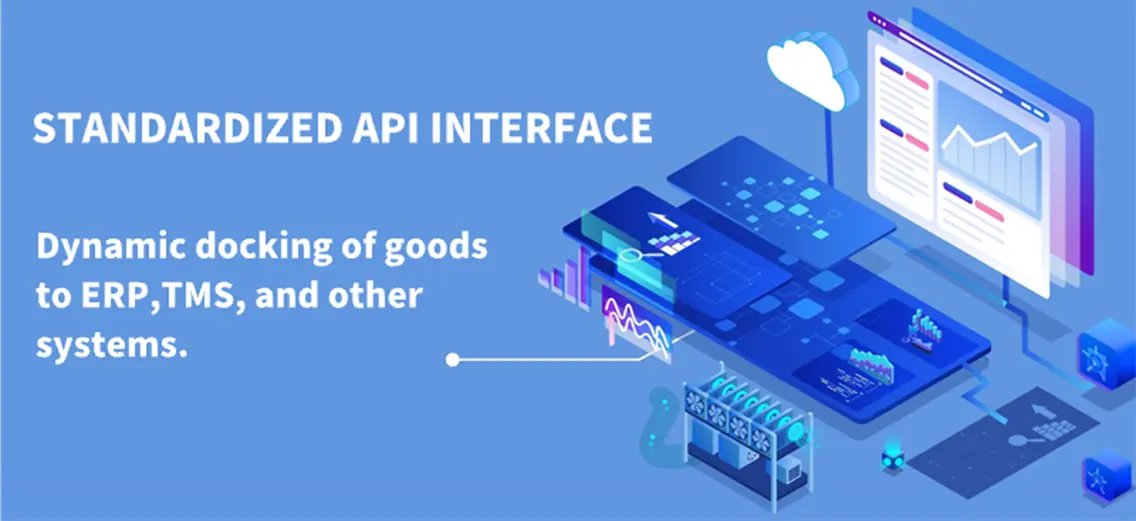
Through API interface integration, the dynamics of goods can be automatically written back to internal systems and customer service systems of the enterprise, assisting global logistics enterprises, supply chain enterprises, cross-border e-commerce enterprises, software platforms and other enterprises to achieve more efficient and refined goods tracking management, and to do risk control and prediction in advance.
Reliable Ocean & Air Cargo Tracking for a Smoother Supply Chain begins with a unified tracking platform. We bring proven reliability to both ocean and air cargo tracking, giving you the accurate data and control needed to streamline operations from port to runway.
By implementing the Trackingeyes API, global import-export teams can directly inject schedules, vessel route modifications, and terminal alerts into custom ERP/TMS programs. This results in instant exception visibility, lower administrative costs, and fewer destination port demurrage crises.
Connect with an Integration ExpertFrom North American Class I rail nodes to complex European inland hubs, our tracing handles every mile.
Navigating the complex handoffs between Class I rail operators (BNSF, Union Pacific, CSX, Norfolk Southern) and ocean ports is a notorious black hole. Our API maps rail yard arrival, container grounding, and railcar departures, ensuring drayage companies pull containers the moment they are available to avoid storage fees.
For high-value electronics, pharmaceuticals, or perishables, cargo tracking must happen at the hour level, not day level. Integrated air freight tracking captures real-time milestones (customs cleared, cargo checked-in, departed flight, arrived flight, tail-to-tail transfers), updating logistics teams instantly.
Managing transfers across Rotterdam or Antwerp barge networks requires real-time AIS vessel telemetry and cut-off alarms. Our system evaluates lock schedules and draft levels to maintain fluid transshipments along vital European waterways.
Key criteria used by chief procurement officers to evaluate enterprise logistics visibility partners.
Enterprise platforms require real-time updates without API lagging. Trackingeyes delivers low-latency querying (response times under 200ms) with clean JSON payloads structured for instant database updates.
Relying solely on carrier EDI generates empty windows. Enterprises look for dual-source tracking, combining direct carrier integrations with live satellite and terrestrial AIS vessel signals for verified location mapping.
Instead of manual tracking, systems should push alerts. Critical triggers include: "Vessel Schedule Deviation", "Port Opening Cut-off Modification", and "Container Roll Alert" to enable pre-emptive logistics choices.
The Cost of Failure: An unexpected cargo pick-up failure at the destination port because of missed notifications can trigger thousands of dollars in daily demurrage fines and paralyze production lines. Verified tracking data turns uncertainty into a controlled, planable workflow.
Get expert answers to technical and operational tracking questions from our system engineers.
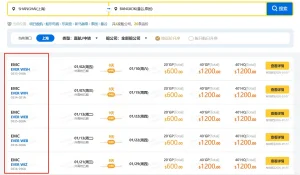
Scale your supply chain operations with our advanced tracking modules and rate management systems.
 Trackingeyes