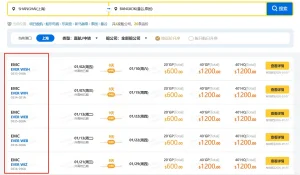
Explore our leading-edge APIs and software platforms designed to optimize maritime schedules, automate rate matching, and track containers in real time.
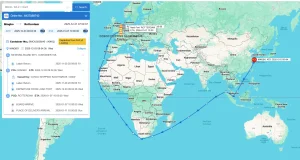
In modern global trade, supply chain efficiency dictates bottom-line profitability. Among the most complex operational bottlenecks faced by importers, exporters, and logistics service providers is the management of Demurrage & Detention (D&D) charges. Central to this challenge is the concept of the Last Free Day (LFD)—the terminal date by which an imported container must be picked up from the port terminal (demurrage free-time expiration) or returned empty to the shipping line's depot (detention free-time expiration).
Globally, terminal congestion, labor disputes, customs delays, and chassis shortages have compressed the practical timeline between container discharge and LFD threshold execution. According to maritime industry benchmarks, Class-1 ports across North America and Europe have registered historically high average demurrage fees, occasionally exceeding $500 per container per day past the LFD. The aggregate annual cost of D&D penalties across the top 100 global importers is estimated to run into billions of dollars.
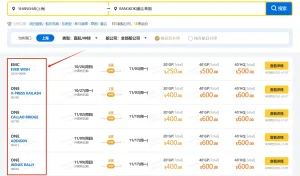
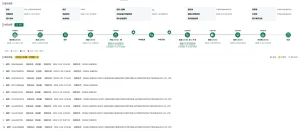
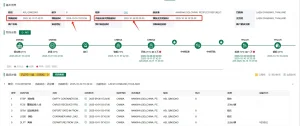
To address this issue, enterprise players are shifting from reactive container retrieval to proactive, API-driven workflows. By leveraging advanced ocean and air cargo tracking solutions, companies can monitor milestonewise progress, accurately forecast ETA deviations, and align trucking capacities to systematically avoid exceeding the LFD threshold.
Monitoring free-time inside the port terminal. Automating notifications as the container approaches its storage expiration limits.
Overseeing container turnaround times outside the terminal boundaries, ensuring empty equipment is returned within the free time frame.
Using historical carrier performance, AIS telemetry, and terminal backlog metrics to dynamic-model the optimal discharge-to-gate-out window.
Several critical industry transformations are driving the adoption of real-time visibility tech to combat excessive port charges:
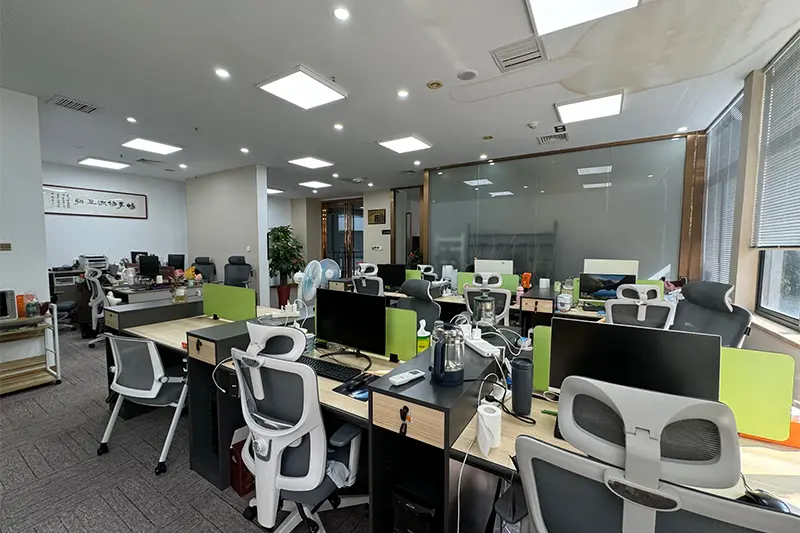
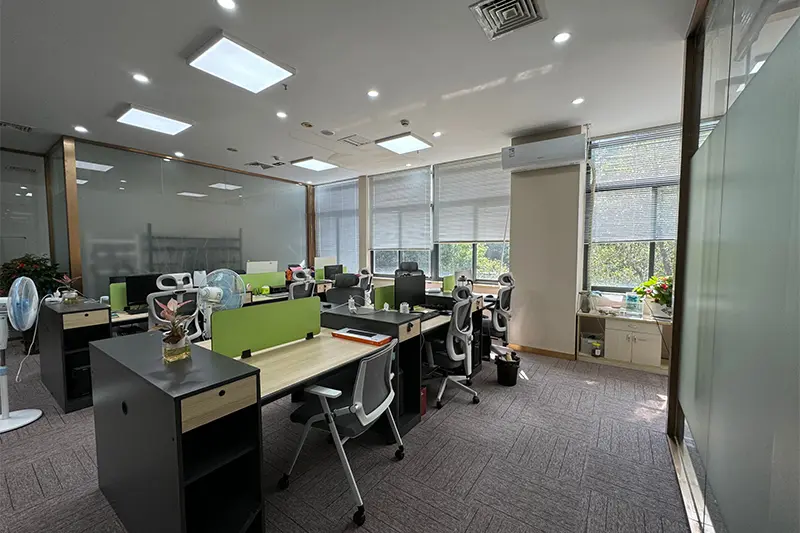
Founded in 2015, Trackingeyes is a leading provider of global end-to-end logistics tracking and supply chain visualization solutions. With a founding team boasting over ten years of deep-domain logistics expertise, we uniquely comprehend the day-to-day challenges of cargo management. We specialize in global end-to-end cargo tracking by sea and air, serving thousands of import and export enterprises worldwide. Our services include customizable tracking solutions and open API data interfaces to enhance supply chain visibility and operational efficiency.
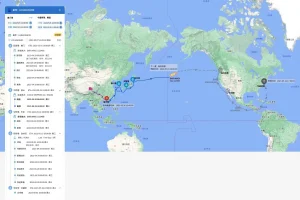
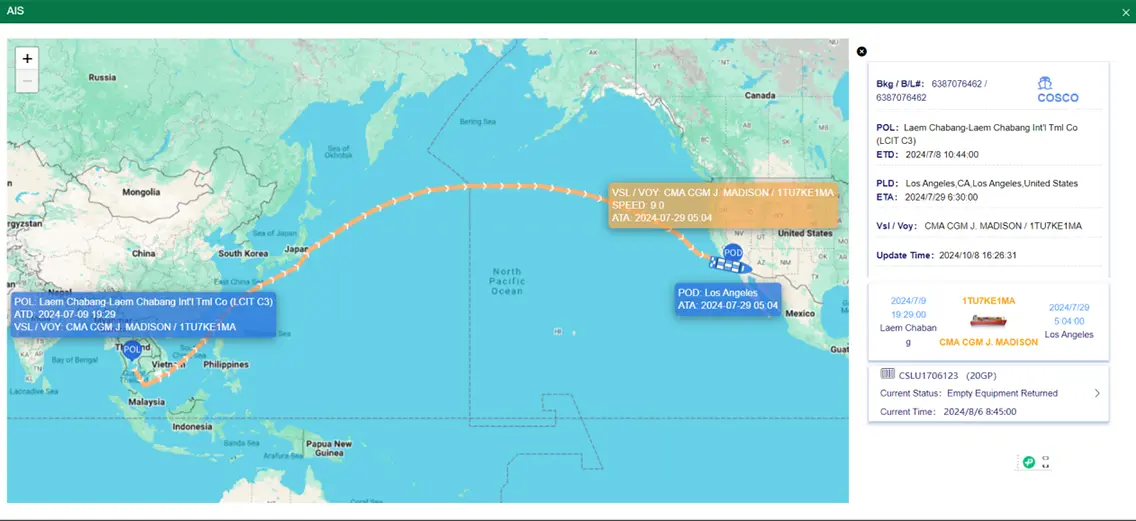
Our platform achieves full-chain data coverage from the source to the terminal through the collection and aggregation of data from various networks, including terminal operating systems, customs portals, shipping companies, rail transport nodes, and commercial flight plans. Through the Trackingeyes platform, customers can instantly bridge connections with hundreds of global data pools, radically elevating the speed, intelligence, and predictive accuracy of logistics processes.
Connect With Our Engineers
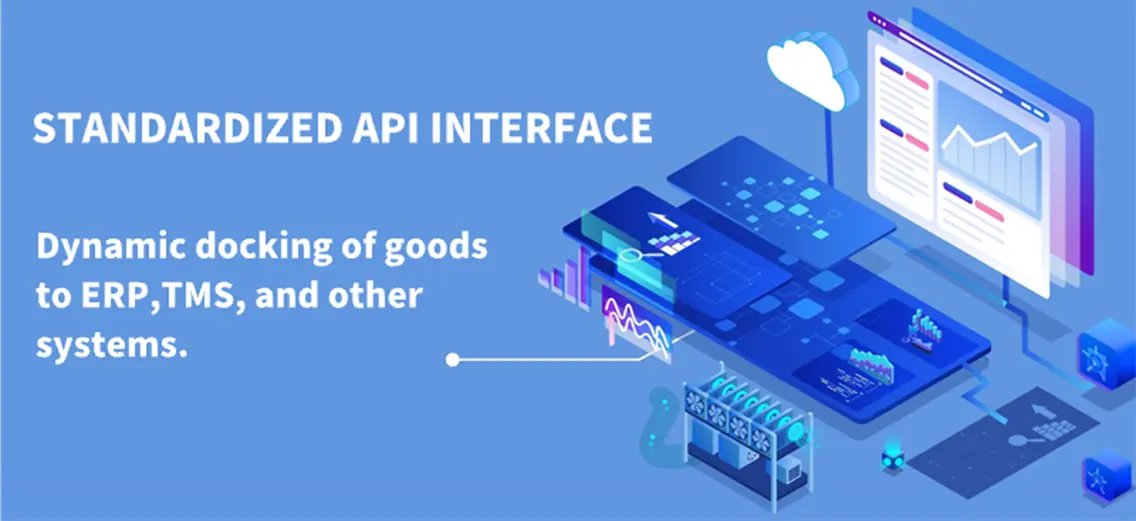
Through direct API interface integration, the dynamic movements of goods are automatically written back to the internal systems (ERP/WMS) and customer service platforms of the enterprise. This empowers global logistics providers, supply chain platforms, cross-border e-commerce networks, and software operators to achieve highly refined tracking management, enabling active risk control and predictive resolution ahead of schedule.
Unlock end-to-end visibility with our trusted tracking platform. We bring proven reliability to both ocean and air cargo tracking, giving you the accurate data and control needed to streamline operations from port to runway. Reduce excess dwell time, predict port availability, and maintain total control over your shipments' Last Free Day calculations.
In North America, intermodal transport represents a major vulnerability for LFD violations. Containers moving from West Coast ports (e.g., LA/Long Beach) via rail to Inland Ports (such as Chicago or Memphis) face complex transfer schedules. Trackingeyes integrates with Class-I railroads to provide continuous container milestone transparency, alerting dispatchers long before the container hits the terminal floor, ensuring chassis and drivers are pre-allocated.
High-volume manufacturing trade lanes demand seamless synchronization between ocean arrival and customs clearance. Delays at destination customs can quickly consume the allotted free days. Our integration with global customs portals provides early warnings regarding documentation blocks or inspection holds. This enables cargo handlers to coordinate with destination services to expedite clearances and pick up containers immediately upon discharge.
To maintain competitive leadership, Trackingeyes operates along a structured technological roadmap aimed at bringing complete transparency to international freight movements:
Deploying deep learning algorithms trained on historic transit patterns, port queues, weather disturbances, and vessel performance dynamics to output highly reliable ETA predictions, bypassing unreliable carrier-issued estimates.
Synthesizing data from container-mounted IoT sensors. This enables monitoring of interior humidity, temperature changes, and shock impacts along with real-time location metrics for high-value shipping items.
Developing dynamic API algorithms that auto-calculate LFD dates across thousands of global ports by directly interpreting carrier tariff schedules and live vessel discharge timestamps, enabling auto-dispute workflows.
Reducing LFD-related expenses requires a unified, system-wide optimization strategy. The Trackingeyes platform is engineered to serve three distinct supply chain cohorts:
Empower logistics departments to actively plan warehouse labor, coordinate drayage trucking schedules, and accurately measure demurrage risk exposure to preserve profit margins.
Deliver high-value, transparent tracking updates directly to clients, enhancing customer satisfaction and protecting logistics margins from expensive service-recovery payouts.
Optimize container stack layouts and landside gate logistics based on accurate dwell predictions, ensuring fluid equipment turnarounds and reduced terminal gridlock.
The Last Free Day (LFD) is the final calendar day a container can remain inside a port terminal or cargo yard (for demurrage free time) or outside the port under custody (for detention free time) without incurring financial penalties from the shipping line or port terminal authority.
The LFD calculation typically begins the day the container is discharged from the vessel (Actual Time of Discharge). Depending on individual carrier contracts and local port rules, shippers are granted a set number of "free days" (often 3 to 7 days). The LFD is the calendar day those free days expire.
Demurrage refers to the fee charged for keeping a loaded container inside the port terminal past the allotted free days. Detention (or per diem) is the charge for keeping the container equipment outside of the terminal (such as at a private warehouse or drayage yard) beyond the allowed return time limit.
By leveraging real-time AIS and machine learning calculations, tracking platforms estimate exact vessel berths and container discharge times. This allows logistics teams to coordinate container transport and chassis positioning beforehand, reducing transit delays and securing empty containers for timely return.
Yes, Trackingeyes provides a robust, customizable open API interface. It automatically retrieves milestones, calculates ETA deviations, and alerts cargo owners of upcoming LFD deadlines, facilitating integration directly into customer ERP or TMS platforms.
Different entities control different parts of the terminal logistics loop. Shipping lines negotiate container lease terms with BCOs, whereas terminal authorities manage physical space limitations within their container yards. Consequently, demurrage rules (controlled by terminals or carriers) and detention terms (controlled by carriers) run on separate schedules.
Discover our global vessel AIS visualization tools, ERP visual engine integrations, and air cargo tracking APIs.
 Trackingeyes