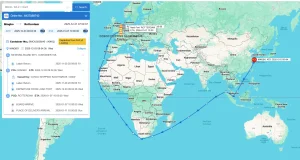
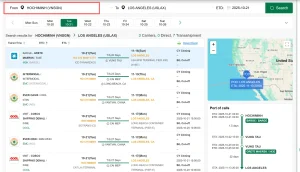
Harness real-time API integrations, AIS vessel tracking, and automated air freight monitoring solutions tailored for high-growth global enterprises.
How Modern Freight Forwarders and Manufacturers Utilize Granular Logistics Datasets for Global Trade Compliance
The Master Airway Bill (MAWB) is issued by main carrier airlines directly to the cargo forwarders. Conversely, the House Airway Bill (HAWB) represents the specific transactional shipment contract issued by forwarders to direct shippers, holding crucial details regarding consolidated cargo.
Contains precise specifications of the airports of origin and destination, flight transit stops, transfer details, flight numbers, dates, and handling directions which specify temperature sensitivity, dangerous goods (DG) status, and warehouse instruction sets.
Indicates charge declarations, structural gross weight, dimensional weight calculation multipliers, volumetric specifications, custom declared valuations, and international Harmonized System (HS) code records mapping item classifications.
In modern high-speed supply chains, manual management of Airway Bill details is a primary bottleneck. Global enterprise shippers encounter severe structural issues when tracking multi-segment air shipments. Without precise programmatic verification of the 11-digit AWB numbers, data translation errors, flight cancellations, customs hold-ups, and destination logistics blockades go unnoticed, translating into massive financial losses and unmet Service Level Agreements (SLAs).
Trackingeyes solves this structural operational gap by deploying automated API pipelines that retrieve data points directly from over 300 major air carriers and global EDI systems. We harmonize distinct structural layouts into unified, standard JSON payloads, supplying enterprise software networks (SAP, Oracle, Microsoft Dynamics) with real-time, clean data streams.
How Global Supply Chain Directors Address Delivery Latency, Hidden Demurrage, and High Transport Surcharges
Modern global logistics operates under tight constraints. Procurement directors manage thousands of active international shipments, making visibility an essential operational requirement. Trackingeyes serves procurement managers by resolving these major concerns:
Consignees face steep detention fees because they lack visibility of arrival times. Real-time updates prevent delays at destination ports, ensuring ground customs clearance teams align workflows before touchdown.
Unanticipated air fuel adjustments, peak-season capacity premiums, and terminal handling charges drive logistics costs up. Our automated dashboards offer rate visibility to match historical shipment data against freight rate metrics.
Connecting supply chain platforms through customs interfaces helps write transit updates back to client services, replacing fragmented carrier web portal searches with a single source of truth.
| Tracking Parameter | Legacy Freight Operations (Manual) | Trackingeyes Automated API System | }
|---|---|---|
| Status Refresh Frequency | 12 to 24-hour delayed checkups | Automated, near real-time (API and webhooks) |
| Carrier Coverage | Fragmented across separate websites | Unified network of 300+ airlines & 100+ sea carriers |
| ETA Predictions | Heuristic estimates based on scheduled timelines | AI-driven predictive calculations using live telemetry |
| Data Ingestion | Manual portal searching & spreadsheet entry | RESTful API, Webhooks, EDIFACT, XML |
Combining Advanced Software Engineering with the World's Densest Logistical Infrastructure Network
China is a leader in global supply chain digitalization. Driven by high export volume, Chinese developers design resilient tracking networks that manage massive transaction scales with low processing delay.
Trackingeyes leverages this technology base to build tools for global shippers. By positioning our primary nodes near major transport hubs in Shenzhen, Guangzhou, Hong Kong, and Shanghai, we process live data feeds directly from regional air gateways and maritime operations. This proximity ensures real-time access to flight data, customs filings, and seaport movements before these updates flow to international aggregators.
For global buyers, this framework guarantees faster status alerts, competitive service rates, and API integration capacities designed to meet global enterprise requirements.



Ensuring Enterprise Data Alignment with IATA Regulations, GDPR Protection Rules, and Multi-Regional Customs Audits
Our structures align with IATA Cargo XML and Cargo-IMP protocol standards, which prevents data formatting conflicts with international commercial air carriers.
We encrypt all PII data in transit and at rest. Consignee addresses and commercial cargo values remain protected to comply with local privacy rules.
Connecting air freight tracking to customs systems allows tracking of import clearances, alert releases, and regulatory holds across multiple international entry points.
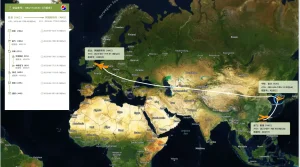
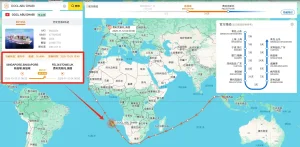
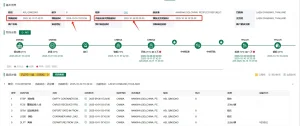
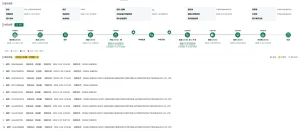
Trackingeyes Visual Platform Deployment in Real-World Scenarios
The air freight and ocean logistics sectors are adopting automated, predictive data feeds over manual tracking. Modern organizations use these integrations in three key scenarios:
For sensitive electronics, missed handovers increase risk. Integration of flight schedules and real-time tracking provides updates at intermediate airports, notifying security when status issues arise.
Car manufacturing plants rely on parts arriving on tight schedules. Trackingeyes integrates AWB data with ERP production modules, triggering supply alerts when delays exceed configured thresholds.
Biomedical deliveries must avoid long stays on tarmac locations. Combining real-time flight schedules with cargo temperature updates tells ground handlers when to transfer sensitive materials to temperature-controlled storage.
Industry standards are shifting from milestone tracking (which reports issues after they occur) to dynamic prediction. AI models use historic flight performance, weather patterns, and airport congestion to estimate arrival times before aircraft depart.
At the same time, IoT tracking sensors send temperature, shock, and position data via mobile networks. When these sensors are paired with Airway Bill details, they give operators deep, end-to-end visibility of their cargo status.
Answers to Technical Questions Regarding Airway Bill Systems, API Integrations, and Carrier Operations
Founded in 2015, Trackingeyes is a provider of global end-to-end logistics tracking and supply chain visualization solutions.
With a founding team boasting over ten years of logistics expertise, we deeply understand industry pain points. We specialize in global end-to-end cargo tracking by sea and air, serving thousands of import and export enterprises worldwide. Our services include customizable tracking solutions and open API data interfaces to enhance supply chain visibility and operational efficiency.
The platform achieves full chain data coverage from the source to the terminal through the collection and aggregation of data sources, including logistics information from various data sources such as stations, terminal, customs, shipping companies, and airlines. Through the Trackingeyes’ Platform, customers can quickly connect with hundreds of global data sources, greatly improving the efficiency and intelligence of logistics tracking.
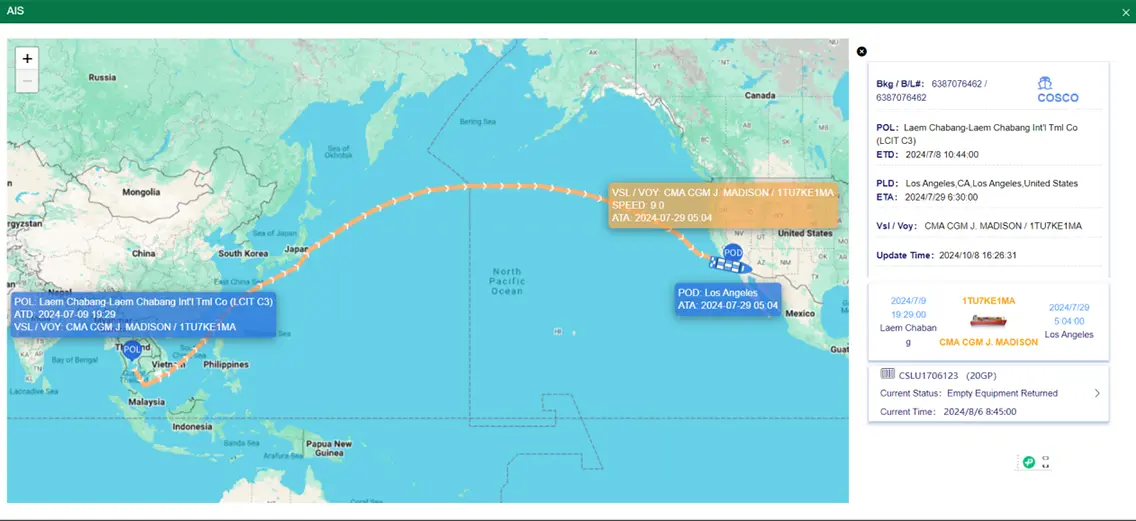
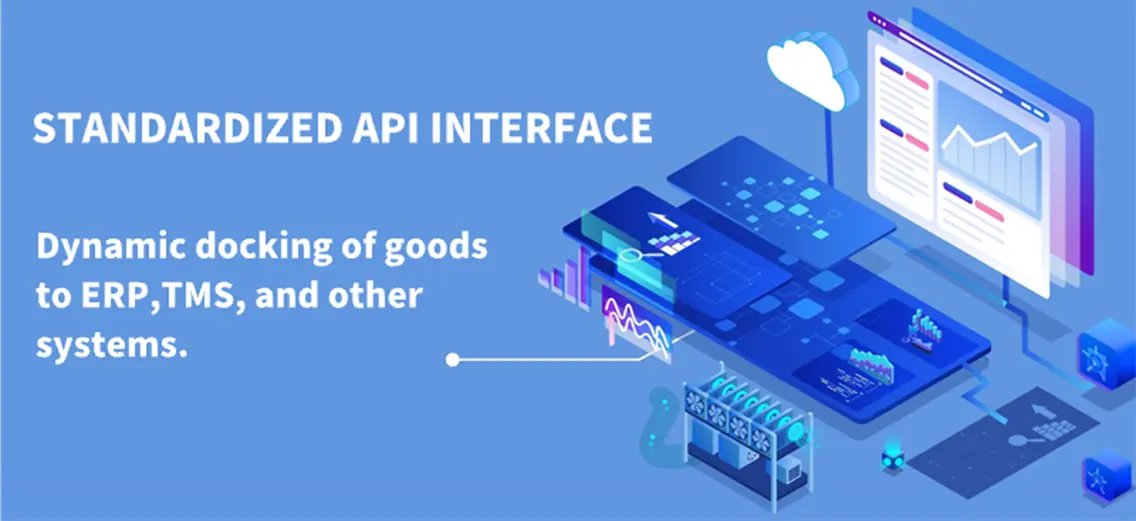
Through API interface integration, the dynamics of goods can be automatically written back to internal systems and customer service systems of the enterprise, assisting global logistics enterprises, supply chain enterprises, cross-border e-commerce enterprises, software platforms and other enterprises to achieve more efficient and refined goods tracking management, and to do risk control and prediction in advance.
Select from our enterprise tools to track ocean cargo, update ETA predictions, and integrate transport datasets.
 Trackingeyes