 Trackingeyes
China 807 Cargo Tracking: Technical Infrastructure & Strategic Procurement Whitepaper
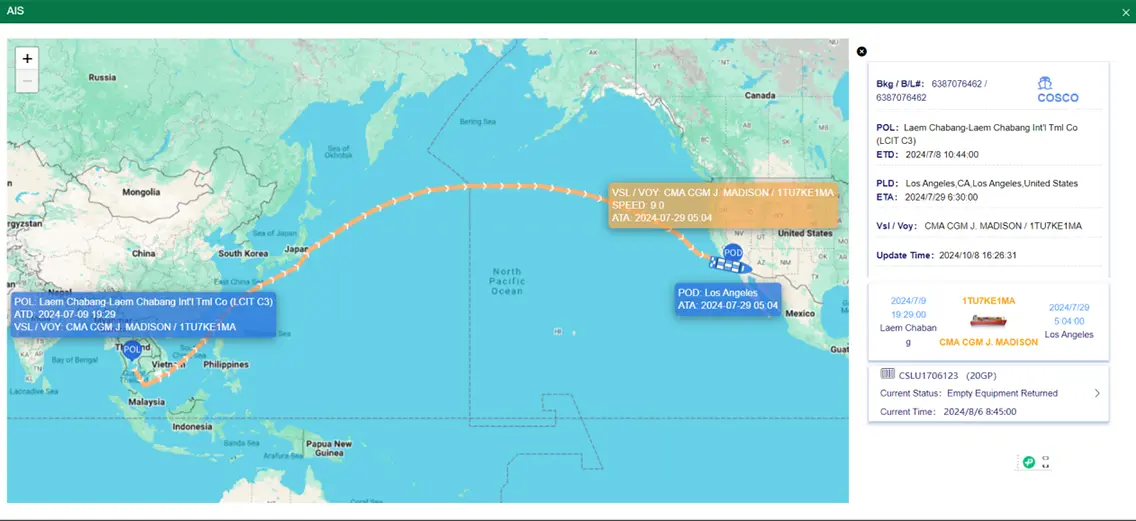
In modern industrial logistics, visual telemetry has transitioned from a downstream option to an upstream strategic necessity. Globally active enterprises depend on exact coordination of trans-border components, particularly within assembly and manufacturing architectures requiring heavy compliance protocols such as Customs Code 807 schemes. The China 807 Cargo Tracking standard embodies a unified framework of hardware (transmitters, ruggedized IoT trackers) and software (AIS data streams, satellite transponder loops, and RESTful APIs) ensuring zero coverage gaps from origin factory to the destination port.
This whitepaper outlines the structural challenges of global multi-modal logistics, explores technology integrations, establishes procurement guidelines, and presents the definitive technical roadmap of Trackingeyes' end-to-end tracking suite.
1. Global Enterprise Procurement Trends & Strategic Hardware Demands
Procurement directors face unprecedented macro challenges: port congestion, volatile blank sailing rates, complex rail bottlenecks across North America, and strict emission tracking. When selecting a China-based cargo tracking manufacturer, enterprise criteria focus heavily on operational durability, battery telemetry, global cellular fallback, and system interoperability.
- Ruggedization & Hardware Longevity: Tracking devices must withstand extreme ambient ocean temperatures, marine salinity, and physical shocks. The chassis must adhere to IP67/IP69K ingress protection ratings.
- International Network Fallback: Devices should incorporate multi-band IoT modems supporting LTE-M, NB-IoT, and 2G fallback, combined with eSIM technologies to ensure seamless data handovers across different sovereign carriers.
- Sensory Telemetry Arrays: Beyond simple GPS coordinates, sensors tracking temperature, relative humidity, light exposure (for intrusion alerts), and 3-axis shock monitoring are critical for high-value machinery and pharmaceutical cold chains.
2. Macro Industry Solutions: Resolving Multi-Modal Blindspots
Supply chains are only as resilient as their weakest connection. A typical multi-modal route involves multiple handoffs between ocean liners, marine terminals, customs yards, and railway networks. Trackingeyes designs end-to-end tracking methodologies targeted at resolving structural visibility gaps in these key segments:
| Logistics Domain | Core Challenge | China 807 Technical Solution | Key Performance Metric (KPI) Improvement |
|---|---|---|---|
| Maritime Transit | Blank sailings, inaccurate vessel ETAs, and lost container signals over open ocean. | Hybrid tracking combining terrestrial IoT pings with satellite AIS stream integration. | ETA variance reduced to less than 12 hours globally. |
| North American Rail | Congestion at inland terminals (e.g., Chicago, Memphis nodes) and long drayage wait times. | Integrated geofencing alerts coupled with automated rail-car tracking data. | Yard dwell time reduced by up to 22%. |
| Air Cargo | Flight schedule changes, payload offloads, and strict battery safety regulations (UN38.3). | Aviation-compliant smart flight tracking devices with automatic pressure-based flight mode detection. | 100% compliance with international airline safety standards. |
| Customs (807 Code) | Inefficient verification of assembled component origins and cross-border delay penalties. | Automated loading logs, digital packing slip matches, and API validation. | Audit preparation time slashed from days to minutes. |
3. Technical Roadmap: Trackingeyes AIS and Machine Learning Architecture
Trackingeyes leverages a dual-engine architecture combining physical IoT tracking data with AI-driven analytics. The core components of our technology platform include:
A. Multi-Source Data Ingestion System
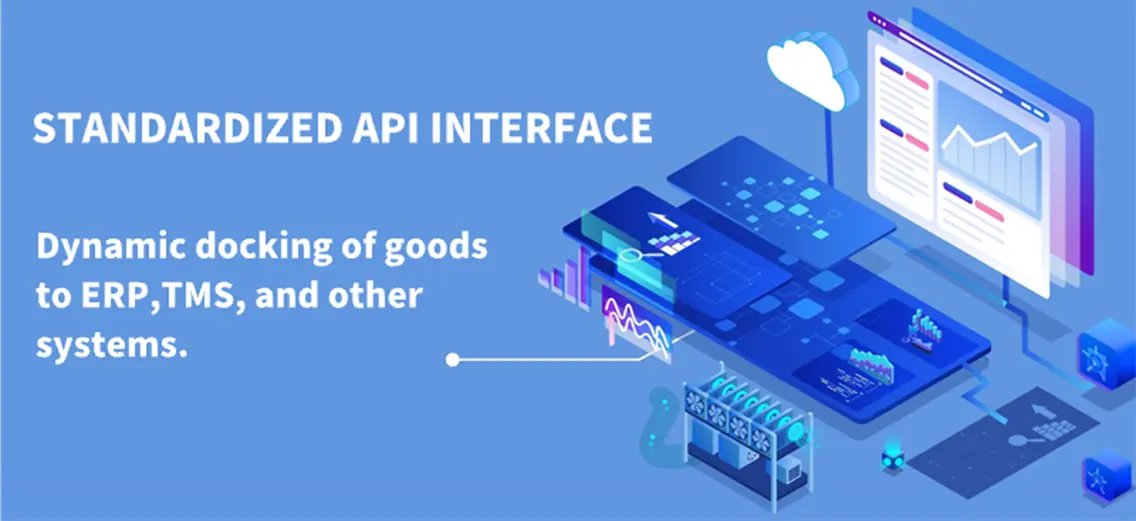
Our platform aggregates real-time data feeds from over 100 global ports, terminal operating systems (TOS), AIS receiver networks, and airline manifests. By normalizing unstructured carrier data into standardized JSON payloads, we provide a unified API schema for seamless ERP integration.
B. AIS Predictive Processing Engine
Traditional tracking relies on historical averages to estimate vessel arrivals. Trackingeyes uses machine learning algorithms that factor in current draft levels, historical route anomalies, weather patterns, and real-time port queuing times to compute highly accurate, predictive ETAs.
C. Enterprise ERP and API Integrations
Designed with software developers in mind, our RESTful APIs and Webhooks push live tracking data directly into core corporate systems (such as SAP, Oracle Cloud, and Microsoft Dynamics 365). This eliminates manual lookups and automates downstream logistics planning.
4. Global Regulatory Compliance & Information Security Assurance
Operating a global tracking network requires strict adherence to international security frameworks. Trackingeyes holds ISO/IEC 27001 certifications, ensuring our API integrations and database systems employ robust encryption protocols (AES-256 for data at rest, TLS 1.3 for data in transit). Furthermore, our hardware and software systems strictly comply with global data privacy frameworks (including GDPR, CCPA, and HIPAA) to protect sensitive supply chain and personal data.