A carton leaves a warehouse with a barcode, a timestamp, and a destination. Hours later, a scan records its arrival at a distribution center. These small events form the basis of track and trace in supply chains: tracking shows where goods are now, while tracing reveals where they have been. Tracking And Trace systems connect these records across suppliers, carriers, warehouses, and customers.
Stanford supply-chain scholar Hau L. Lee wrote, “The best supply chains aren’t just fast and cost-effective. They are also agile, adaptable, and aligned.” Reliable visibility can support those qualities. A business may use barcodes, RFID tags, GPS, or shared digital records to follow products and investigate delays. The details matter. A missed scan or an incorrect product code can leave a convincing-looking dashboard full of gaps.
This guide explains how track and trace works, which technologies support it, and how businesses use it to improve visibility, manage recalls, and communicate with customers. It also considers practical limits, including inconsistent data and systems that do not connect smoothly. A scan is not proof of perfect control. Not magic. Good traceability depends on accurate records, clear processes, and people who notice when the information does not match the shipment. Tracking can make a supply chain easier to understand, but it cannot fix every weak link on its own.
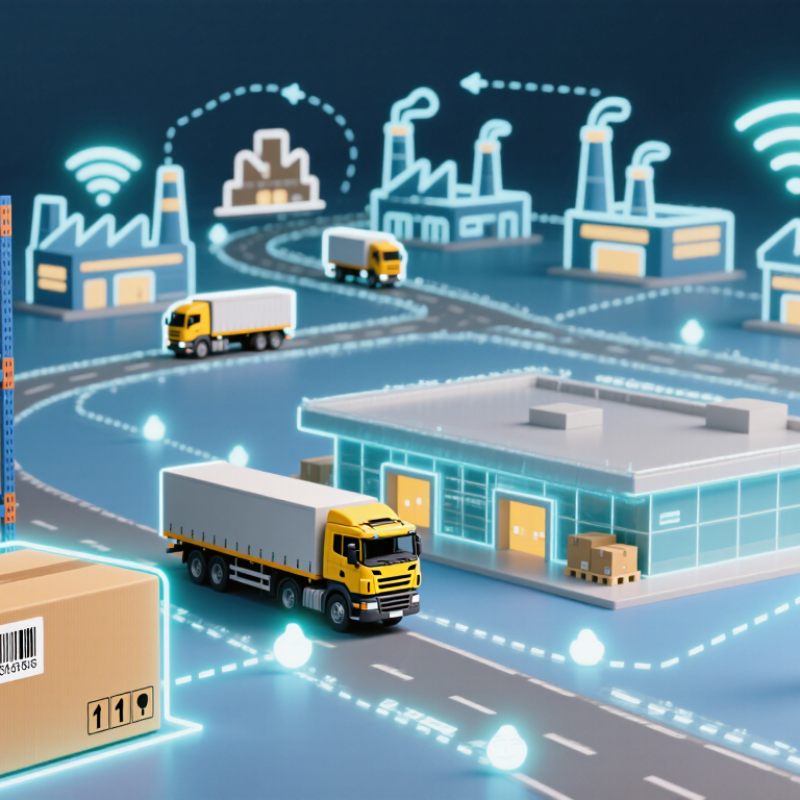
Track and trace links a physical product to records of its movement and handling. Tracking shows where an item is going; tracing looks back to its source and earlier events. The connection may rely on lot or serial numbers, barcode scans, shipment documents, and sensor readings.
The scope can begin with raw materials and continue through production, warehousing, transport, and delivery. At a loading dock, a worker might scan a pallet at 8:15 a.m. A temperature sensor may record conditions during the trip. These events help teams locate delays, review handling history, and identify which batches may need attention. Some supply chains share data with suppliers and carriers; others cover only one company’s facilities. That boundary matters.
Useful traceability depends on consistent identifiers and timely, accurate records. A missed scan can leave a gap, even when the goods moved safely. Data also needs context: a timestamp without a location or event type may tell little. In practice, teams need to define what gets recorded, who can update it, and how exceptions are checked. Perfect visibility everywhere is unrealistic; dependable evidence at key decision points is more useful.
Track and trace systems create a time-stamped record of a product’s movement and handling. At packing, a worker scans a code linked to a lot, item, or shipment. Later scans at a dock, vehicle, or receiving desk add location and custody details. Sensors may also record temperature or humidity when product quality depends on those conditions. The data is useful only when each event is recorded accurately.
Each event usually contains an identifier, time, place, and event type. Some records also include an operator or sensor reading. Systems share these records through dashboards, data files, or connected software, giving suppliers and buyers a common view. That visibility can help teams locate delayed goods, compare handoffs, and narrow the scope of a quality issue. But a scan does not prove every detail. A wrong label or missed scan can leave a neat-looking, incomplete trail. This is easy to underestimate.
Tips: Choose the events that matter, such as dispatch, receipt, and temperature exceptions. Use consistent identifiers, and train staff to scan at the actual handoff, not later from memory. Test whether a partner can read and return the same data fields before expanding. Keep a simple correction process. Messy data happens.
| Event time (UTC) | Supply-chain event | Product and traceability data | Quantity | Location and custody | Captured data | Data shared with | Traceability outcome |
|---|---|---|---|---|---|---|---|
| 2026-10-14 06:20 | Production lot recorded | Chilled food product; lot LOT-261014-A; use-by date 2026-10-28 | 480 cases | Production facility; custody: manufacturer | Lot number, product description, production time, use-by date, and batch record reference | Quality team and inventory system | Creates the batch-level record used to link later handling events to the product. |
| 2026-10-14 08:05 | Cases packed and palletized | Lot LOT-261014-A; pallet IDs PAL-001 to PAL-020 | 20 pallets; 24 cases per pallet | Packing area; custody: manufacturer | Pallet labels scanned; case-to-pallet quantities and lot association recorded | Warehouse management system and shipping team | Connects each pallet to its product lot and supports pallet-level tracking. |
| 2026-10-14 09:10 | Shipment dispatched | Shipment SHP-261014-07; lot LOT-261014-A | 20 pallets; 480 cases | Outbound loading bay; custody transferred to carrier | Pallet scans, dispatch time, shipment reference, trailer seal, and configured chilled range of 2–8 °C | Carrier and receiving distribution center | Establishes the shipment contents, dispatch point, and custody handoff. |
| 2026-10-14 09:18 | Carrier pickup confirmed | Shipment SHP-261014-07; vehicle trip TRP-88421 | 20 pallets | Origin facility; custody: carrier | Pickup scan, vehicle reference, seal confirmation, and driver handoff acknowledgment | Shipper and carrier transport system | Records who accepted responsibility and when the shipment left the origin. |
| 2026-10-14 13:42 | Temperature checkpoint recorded | Shipment SHP-261014-07; lot LOT-261014-A | 20 pallets | In transit; custody: carrier | Temperature logger reading: 4.6 °C; reading time and logger reference recorded | Carrier monitoring system and shipper quality team | Reading is within the shipment’s configured 2–8 °C range at this checkpoint. |
| 2026-10-14 16:55 | Distribution center arrival scanned | Shipment SHP-261014-07; pallet IDs PAL-001 to PAL-020 | 20 pallets received for unloading | Receiving dock; custody remains with carrier until acceptance | Arrival timestamp, dock reference, and pallet scans matched against the shipment notice | Distribution center receiving and inventory systems | Confirms arrival and supports reconciliation of expected versus scanned pallets. |
| 2026-10-14 17:22 | Receipt and condition check completed | Lot LOT-261014-A; receipt reference REC-261014-32 | 20 pallets accepted; 480 cases | Distribution center receiving area; custody transferred to receiver | Quantity verification, packaging condition, receipt time, and receiving temperature check recorded | Receiver inventory system, shipper, and carrier | Closes the transport leg with a documented quantity and condition record. |
Illustrative sample shipment data. Identifiers and event records are examples; temperature limits should be set according to the product specification and applicable requirements.
Track and trace links an item’s identity to recorded events as it moves through suppliers, warehouses, and delivery. A useful record shows what moved, where, and when—not merely where a truck is. GS1 identifiers help standardize these records: a GTIN identifies a trade item, an SSCC identifies a logistics unit, and a GLN identifies a party or location. A lot number groups units from one production run; a serial number distinguishes an individual unit.
Barcode scans are affordable but require line of sight. RFID can read tagged items without direct visibility, though metal and liquids may affect performance. GPS reports vehicle location, while temperature sensors record conditions inside a shipment. GS1’s EPCIS standard structures supply-chain event data for sharing. MHI’s 2024 Annual Industry Report found that 55% of respondents planned to invest more than $1 million in supply-chain innovation within two years. More technology does not guarantee clean data. A missed scan, duplicate label, or mismatched clock can make a polished dashboard misleading. That is the awkward part.
Tips: Set identifier rules before rollout. Test scans at receiving and dispatch, then compare timestamps with physical handoffs. Keep a manual exception process. Small gaps matter.
What Is Track and Trace in Supply Chain?
Applications Across Supply Chain Stages
Track and trace links a product’s identity with records of its movement and handling. A lot number, barcode, or digital tag can connect a shipment to its source, processing steps, and destination. The detail captured depends on the product and the systems used.
At sourcing, records can identify a supplier, material batch, and receipt date. During manufacturing, scans can associate components with a finished item and record key production steps. In a warehouse, location updates help staff find specific cartons and check stock before dispatch. On the road, shipment events—such as loading, arrival, or a temperature alert—can flag delays or handling concerns. At delivery, confirmation can show whether the goods reached the intended location.
This is useful, but not magic. A scan only helps if someone records it accurately and promptly. A misplaced label or missed update can leave gaps, even when the dashboard looks tidy. For example, a food distributor could use batch records to narrow a quality check to affected cartons instead of reviewing every shipment. Still, traceability does not prevent every mistake; teams need clear procedures and regular checks to make the records dependable.
Applications Across Supply Chain Stages
Track and trace links records to a product or lot as it moves through the supply chain. This illustrative example shows how recorded events—such as sourcing, production, packaging, storage, transport, and delivery—may be distributed across stages. Event counts vary by product and traceability system; these figures are not industry benchmarks.
Track and trace links a product’s identity to its movements, custody changes, and handling events. A scan at a loading dock can show when a pallet left, which facility received it, and whether its recorded temperature stayed within range. This visibility helps teams investigate delays, isolate affected batches, and answer customer questions with evidence rather than guesswork.
The gains depend on reliable data. Gartner reported in 2022 that only 21% of supply chain organizations had highly resilient networks, underscoring how difficult end-to-end visibility remains. Records can be late, duplicated, or entered against the wrong item. That sounds straightforward. It isn’t. A barcode scan cannot verify that the physical goods match the label, and disconnected systems can create gaps that dashboards conceal.
Data governance matters as much as scanning equipment. Define who can add, correct, and view each record; retain timestamps and change histories; and agree on shared product identifiers with suppliers. Limit access to sensitive shipment details, and test recovery plans before a disruption. IBM’s 2024 Cost of a Data Breach Report put the global average breach cost at $4.88 million, a reminder that traceability data also needs protection. More tracking is not automatically better. Collecting location details without clear purpose or access controls can create cost, exposure, and false confidence.
It connects an item’s identity with records of its movement and handling. Think of a carton’s journey from supplier to delivery.
A GTIN identifies a trade item, an SSCC identifies a logistics unit, and a GLN identifies a party or location. Lot numbers group production batches; serial numbers distinguish individual units.
Barcodes need a clear line of sight. RFID can read tagged items without direct visibility, though metal or liquids may affect readings.
They can record loading, arrival, delivery, and temperature events. GPS can locate a vehicle, while a sensor records conditions inside the shipment.
Batch records can help narrow a check to affected cartons instead of every shipment. They support investigation, but do not prevent every mistake.
Missed scans, duplicate labels, late entries, or mismatched clocks can create gaps. A neat dashboard can still be wrong.
Set identifier rules before rollout. Test scans at receiving and dispatch, compare timestamps with physical handoffs, and keep a manual exception process.
Define who can add, correct, and view records. Keep change histories, limit access to sensitive shipment details, and test recovery plans.
Not by itself. Collecting location details without a clear purpose or access controls can add cost and create false confidence. Small gaps matter.
Track and trace in supply chains is the process of recording a product’s movement and history as it travels from its origin through production, storage, and delivery. Tracking And Trace helps organizations see where goods are now and understand where they have been, using shared records of events such as manufacturing, packing, shipment, and receipt.
Systems capture product data through identifiers such as serial numbers, barcodes, and electronic tags, alongside information collected by scanning devices and connected sensors. This data can support inventory management, quality checks, shipment coordination, and responses to delays or product issues. Effective systems can improve visibility, accountability, and decision-making across supply chain stages. However, their usefulness depends on accurate, timely data and cooperation among participants. Organizations also need clear rules for data access, retention, security, and sharing, since incomplete records or poorly managed information can limit trust and reliability.

Trackingeyes