7 Container Tracking Solutions Tips for Global Buyers

Time:2026-10-08 Author:Henry
0%

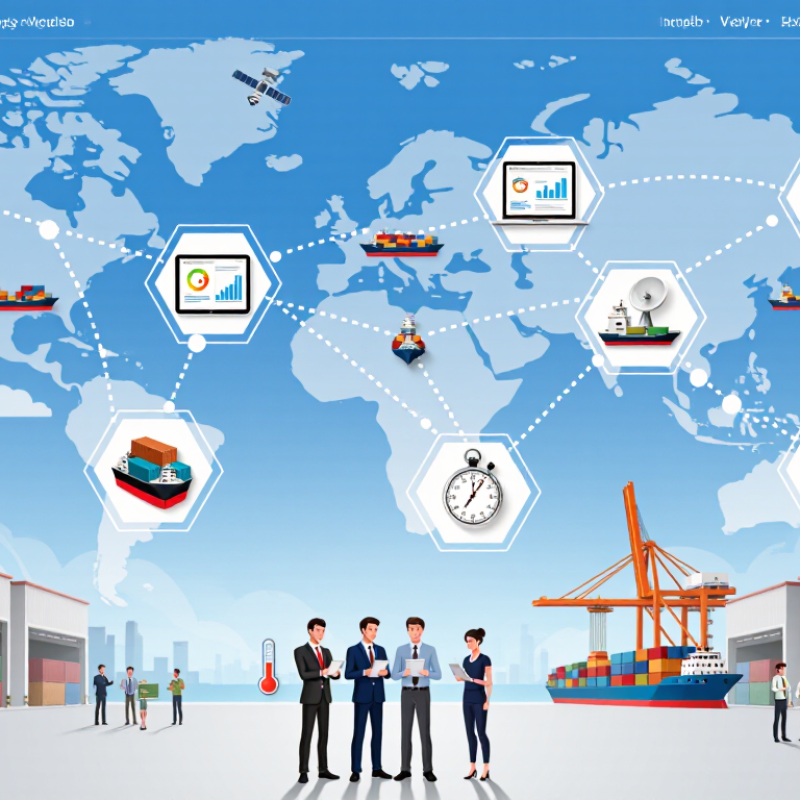
Global purchasing teams rarely lose time because a container simply moves slowly. They lose time because its location, condition, and arrival estimate remain unclear. Effective Container Tracking Solutions can turn scattered updates into practical decisions, from adjusting warehouse labor to warning customers about delays.

Lars Jensen, CEO of Vespucci Maritime and a respected container-shipping analyst, has said, “Visibility is not the same as control.” That distinction matters. A tracking platform may display a blue dot on a map, yet still fail to explain a missed transshipment or a changing port schedule. Buyers should examine data accuracy, update frequency, carrier coverage, sensor options, and integration with purchasing systems. Small details matter. A timestamp can change a delivery decision.

Real-world experience also reveals uncomfortable gaps. Some platforms promise global visibility but provide weak coverage on regional routes. Others send too many alerts, leaving teams to ignore important ones. Better solutions connect milestone data with clear actions. They can flag a container waiting outside Rotterdam, identify a temperature deviation, or compare the latest arrival estimate with a factory booking.

These seven tips focus on useful evidence rather than impressive dashboards. They consider total cost, deployment effort, data ownership, security, and supplier support. No system is perfect. Weather, port congestion, and manual updates can still create uncertainty. However, careful evaluation helps global buyers choose a solution that supports reliable planning, honest communication, and measurable supply-chain improvement.
7 Container Tracking Solutions Tips for Global Buyers

Define Tracking Requirements, Routes, and Shipment Visibility Goals

Global buyers need a tracking plan before choosing any digital solution. Define what matters: container location, estimated arrival time, port events, temperature, or unexpected delays. A useful requirement should be measurable. For example, require location updates every six hours during ocean transit. Avoid collecting data simply because it looks impressive. It creates noise.

Map each route in detail. Record the origin terminal, transshipment ports, destination, inland carrier, and final delivery point. Different routes need different visibility levels. A short regional move may need gate-in and gate-out alerts. A long ocean route may require geofencing, customs milestone updates, and delay notifications. Check whether devices work inside steel containers. Signal loss happens.

Set visibility goals around decisions, not dashboards. Buyers may need to adjust warehouse labor, inform customers, or change production schedules. Connect alerts to those actions. Set clear responsibility for reviewing delays and correcting inaccurate milestones. Data quality needs ownership. In practical shipment reviews, teams often discover that an “in transit” status hides a week-long terminal hold. That gap deserves investigation. No system is perfect, and our early tracking plans sometimes measured too much while explaining too little. Reassess the requirements after several shipments, using actual delay records and delivery performance.

Compare GPS, IoT, RFID, and Carrier-Based Tracking Technologies

Global buyers need more than a tracking label on a container. They need reliable location data, useful alerts, and clear ownership when delays occur. GPS provides frequent location updates through satellite signals, making it suitable for high-value or time-sensitive shipments. However, devices may lose power or signal inside ports, tunnels, or steel-heavy areas. IoT trackers add temperature, humidity, door, and shock data. This detail can explain why cargo arrived damaged, not merely where it stopped.

RFID works differently. Tags are scanned at gates, warehouses, and transfer points, so they usually cost less and require little maintenance. Yet RFID does not provide continuous location visibility. Carrier-based tracking uses transport records and milestone updates from shipping networks. It is simple and affordable, but information may appear late or lack detail during handovers. Tip: Match the technology to the risk. Use GPS for movement, IoT for condition monitoring, RFID for controlled checkpoints, and carrier data for broad shipment milestones.

A practical comparison should include device cost, battery life, coverage, integration effort, and data ownership. Ask how quickly an alert arrives after an unexpected stop. Test the system on a real route, including port entry and inland delivery. Small pilots expose large assumptions. In one trial, a team trusted battery estimates but ignored cold-weather performance. The device failed early. That mistake was avoidable. Buyers should also review data accuracy, dashboard usability, and support response times before scaling globally. No technology is perfect. The strongest plan often combines two methods rather than forcing one tool to do everything.

7 Container Tracking Solutions Tips for Global Buyers

Typical capability comparison of GPS, cellular IoT, RFID, and carrier-based tracking technologies

Scores use a typical 1–5 industry benchmark: 5 indicates stronger performance. GPS and cellular IoT provide the best real-time visibility, RFID is effective for low-cost checkpoint identification, and carrier-based tracking is useful for milestone updates without installing hardware. Actual results vary by route, network coverage, container construction, battery capacity, and reader availability.

Evaluate Data Accuracy, Coverage, Integration, and Alert Capabilities

7 Container Tracking Solutions Tips for Global Buyers

Reliable container visibility begins with data accuracy. Ask how often location records are refreshed and how missing events are handled. A container shown at a terminal may have departed hours earlier. That delay can disrupt warehouse labor and customer commitments.

Tip: Compare tracking records with carrier milestones, gate scans, and your own delivery notes. Do not trust a dashboard simply because it looks precise. Check its performance on delayed and rerouted shipments.

Coverage matters across ports, inland terminals, rail corridors, and smaller destinations. Some systems work well on major ocean routes but become quiet after discharge.

Tip: Test real lanes before signing a long contract. Use shipments from different regions, not only your busiest route. Review historical gaps, estimated positions, and the number of containers tracked without manual updates. More coverage is not always better if the underlying data is weak.

Integration should fit daily operations. Confirm whether the solution supports your transport platform, warehouse software, and standard data formats. Clear access controls also protect sensitive shipment information.

Tip: Request a practical trial with booking references, exception events, and delivery timestamps. Alert tools should distinguish a genuine delay from a routine milestone change. Too many notifications create fatigue. Too few create risk. A useful system lets teams set thresholds, assign ownership, and record how each alert was resolved.

No platform is flawless. Build in human review for unusual routes, missing scans, and conflicting status updates.

Assess Security, Compliance, Costs, and Scalability for Global Operations

7 Container Tracking Solutions Tips for Global Buyers

Assess Security, Compliance, Costs, and Scalability for Global Operations

Global buyers need more than a map showing a container’s latest position. A tracking solution should protect location data, shipment details, and user credentials. Ask whether data is encrypted during transmission and storage. Check role-based access, multi-factor authentication, and tamper alerts. Audit logs should show who viewed or changed each record. Test recovery procedures before a major shipment depends on them. Small gaps become expensive quickly.

Compliance requires a documented review, not a checkbox. Confirm where data is stored, how long it remains available, and who can access it. Review contracts for breach notification, subcontractor controls, and data deletion duties. Requirements may differ across routes and operating regions. Keep evidence, including access reports and device-disposal records. Advice from qualified local counsel can clarify uncertain obligations. Guesswork is risky.

Compare total cost, including devices, connectivity, installation, support, replacements, and integration work. A low subscription can hide manual updates or weak reporting. Request a pilot with varied routes, metal-heavy cargo environments, and poor-signal locations. Measure battery life, location accuracy, alert speed, and dashboard workload. Scalability depends on simple onboarding, open interfaces, and dependable support. Yet growth can expose flaws. One pilot may not represent every season or trade lane, so review the assumptions before expanding.

Select, Test, and Optimize the Best Container Tracking Solution

Global container flows are complex. UNCTAD’s Review of Maritime Transport 2024 states that ships carry over 80% of global merchandise trade by volume. A tracking solution must therefore work across ports, vessels, railways, and warehouses. Select systems that combine location updates, geofencing, estimated arrival times, temperature records, and exception alerts. Do not buy impressive dashboards alone. Ask whether the data arrives quickly enough for a real logistics decision.

Tip: Test before scaling.

Run a 30-day pilot on different routes, container types, and carriers. Measure location accuracy, battery life, alert speed, data completeness, and integration effort. Compare the system’s arrival predictions with actual gate and port events. The World Bank’s Logistics Performance Index 2023 assessed 139 economies and included tracking and tracing as a core logistics dimension. That matters because visibility is not only a software feature. It affects planning, inventory, and customer communication. One missed update can still distort an entire delivery plan.

Tip: Optimize with evidence.

Review false alerts every week. Remove notifications that staff routinely ignore. Set different rules for fragile cargo, long port dwell times, and high-risk transfer points. Keep a manual fallback for weak network areas. It may feel inefficient. It is often safer. Teams should also check access permissions, data retention, and system uptime. My own practical lesson is uncomfortable: the most detailed tracker is not always the best choice. A simpler system, used consistently, can produce more reliable decisions.

7 Container Tracking Solutions Tips for Global Buyers - Select, Test, and Optimize the Best Container Tracking Solution

Tip Evaluation Dimension Recommended Requirement Typical Planning Data How to Test Optimization Action
1 Define shipment visibility objectives Match tracking frequency and event types to cargo risk, route length, and customer service needs. Basic visibility: 1–4 location updates per day. High-value or time-sensitive cargo: updates every 15–60 minutes while in transit. Compare planned milestones with actual gate-in, loading, transshipment, discharge, and gate-out events. Use event-based alerts for routine cargo and higher-frequency tracking only for critical shipments.
2 Select the right positioning technology Choose satellite positioning, cellular, low-power wide-area connectivity, Bluetooth gateways, or RFID according to coverage and accuracy requirements. Satellite positioning can provide outdoor accuracy of about 5–10 m under suitable conditions; RFID is generally designed for checkpoint identification rather than continuous location. Test performance at ports, inland terminals, warehouses, border crossings, and known low-signal locations. Use multi-network connectivity or store-and-forward capability where coverage interruptions are common.
3 Verify battery life and power management Battery performance should support the complete round trip, including storage, delays, and repositioning. Typical deployment targets range from 3–12 months for periodic reporting; frequent reporting, cold temperatures, and weak signals can shorten operating life. Run a complete-route test with the intended reporting interval and record battery percentage, signal quality, and missed messages. Apply motion-triggered reporting, geofence-based reporting, and low-power sleep modes when continuous tracking is unnecessary.
4 Check environmental durability The device should tolerate outdoor exposure, vibration, dust, water, and temperature changes during ocean and inland transport. For demanding outdoor use, an enclosure rated IP65 or higher is commonly considered; temperature requirements should reflect the actual route and cargo environment. Inspect enclosure protection, mounting security, water resistance, shock tolerance, and operation after temperature cycling. Select mounting locations protected from impact and avoid placing antennas behind dense metal structures.
5 Measure data quality and alert accuracy The solution should distinguish meaningful logistics events from ordinary GPS drift or temporary communication loss. A practical pilot target is at least 95% successful message delivery in tested coverage areas and fewer than 5% false alerts after rule tuning. Reconcile system records with terminal scans, transport documents, and manually verified timestamps. Use location smoothing, dwell-time thresholds, route corridors, and confirmation logic for high-impact alerts.
6 Evaluate integration and data ownership Tracking data should connect with transportation management, warehouse, customer service, and analytics workflows. Prefer documented REST APIs, webhooks, CSV export, role-based access, audit logs, and standard time-zone handling. Test authentication, data mapping, duplicate prevention, delayed messages, API rate limits, and system recovery after downtime. Create a common shipment ID, standardize event names, and define data retention and access policies before deployment.
7 Calculate total cost and scale the program Compare hardware, connectivity, installation, platform, maintenance, replacement, and support costs over the full asset life. Use a 12–36 month total-cost model and include device loss, battery replacement, roaming, integration, and exception-handling labor. Run a controlled pilot across different routes, container types, seasons, and operating teams before wider rollout. Track cost per monitored container, alert resolution time, recovered delays, data completeness, and user adoption monthly.
Indicative planning values only. Actual performance depends on device configuration, network availability, container materials, route conditions, weather, reporting frequency, and local operating procedures.

FAQS

What shipment information should a tracking plan measure?

Define measurable needs, such as container location, arrival time, port events, or temperature. For ocean transit, updates every six hours may be useful. Avoid collecting impressive data without a clear decision.

How should buyers map an international shipment route?

Record the origin terminal, transfer ports, destination, inland carrier, and final delivery point. A regional move may need gate alerts. A long ocean route may need geofencing and customs milestones.

What should shipment alerts help teams decide?

Alerts should support actions, such as changing warehouse labor or updating production schedules. Assign someone to review delays and correct inaccurate milestones. Dashboards alone are not enough.

Why can shipment visibility still be misleading?

An “in transit” status may hide a week-long terminal hold. Check milestone accuracy against actual port records. Data can look clean while explaining very little.

When is GPS tracking useful?

GPS suits high-value or time-sensitive shipments requiring frequent location updates. Signals may weaken inside ports, tunnels, or steel containers. Battery failure is another risk.

What extra information can IoT tracking provide?

IoT devices can record temperature, humidity, door openings, and shock events. This may explain cargo damage, not just its location. More detail can also create noise.

When is RFID or carrier-based tracking enough?

RFID works well at controlled checkpoints, such as warehouse gates and transfer points. Carrier records offer broad milestones at lower cost. Updates may arrive late during handovers.

How should buyers test a tracking solution before expanding it?

Run a small pilot on a real route, including port entry and inland delivery. Test coverage, battery life, alert speed, accuracy, integration, and support. Test it. Our early plans measured too much and explained too little.

Conclusion

Choosing the right Container Tracking Solutions requires a clear understanding of your supply chain priorities. Start by defining tracking requirements, shipping routes, cargo risk levels, and shipment visibility goals. Then compare available technologies, including GPS, IoT sensors, RFID, and carrier-based tracking, based on how well they support your container types, transportation modes, and operating regions. Pay close attention to data accuracy, network coverage, system integration, real-time updates, and alert capabilities so your team can respond quickly to delays, unauthorized movement, or environmental changes.

A reliable solution should also be evaluated for security, regulatory compliance, total cost, ease of deployment, and long-term scalability. Consider device expenses, subscription fees, maintenance, data management, and support requirements before making a decision. The best approach is to select a solution that fits your operational goals, test it on representative routes, measure performance, and optimize the setup using real shipment data. Continuous review can improve visibility, reduce inefficiencies, and support more dependable global container management.


Henry

Henry

Henry is a dedicated marketing professional with a profound expertise in the company's offerings. With years of experience in the industry, he possesses an impressive understanding of the market dynamics and consumer behaviors that drive success. Henry is committed to sharing his insights through......